Samsung Aims for Brighter and More Affordable OLED Displays
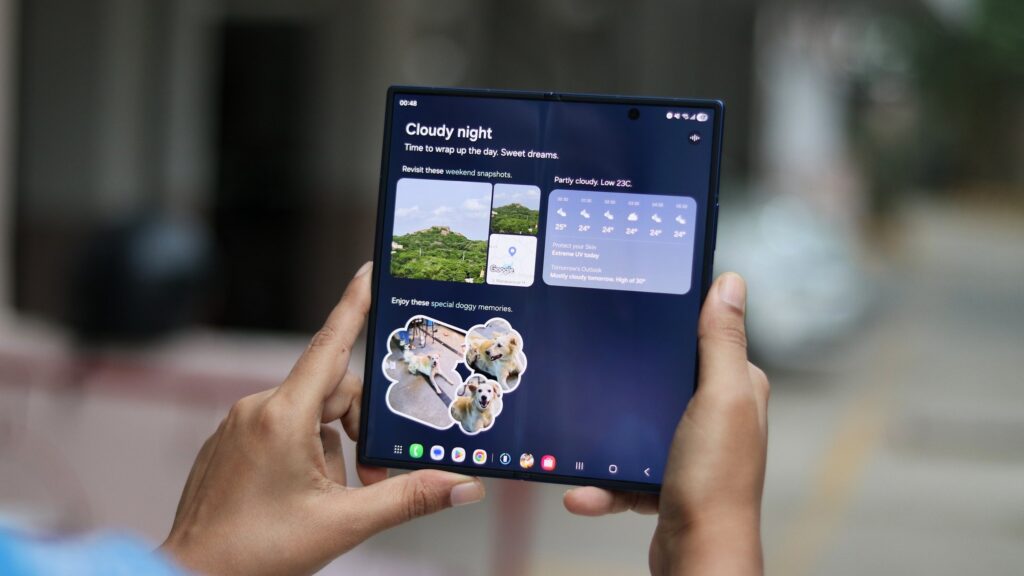
Samsung which is widely recognized as the premier leader in OLED manufacturing, is planning to introduce next generation OLED panels that promise improved brightness and lower production costs compared to today’s models. To support this initiative, Samsung Display has established a partnership with Japan’s TSK Corporation. This collaboration stands out as Samsung’s first joint development arrangement with a venture enterprise.
Samsung and Japan’s TSK Work Together on Affordable OLED Solutions
TSK Corporation said that it has begun collaboration with Samsung Display to create next-generation blue OLED materials using iron catalyst technology. Samsung Display has shown strong interest in TSK’s unique iron catalyst technology and has acknowledged its potential. This work was detailed in a research paper written by both firms and a South Korean professor, which was published in the international journal Nature Communications Materials.
Iron derivatives are emerging as an option to replace Palladium, a metal that is very expensive and available in limited quantity. In OLED production, Palladium catalysts have traditionally been used and the metal is mostly sourced from Russia or South Africa. Besides being expensive and difficult to obtain, Palladium has also drawn concerns over pollution and overall sustainability.
TSK state that it has developed an alternative chemical process that is much simpler and more environmental friendly than the traditional method using Palladium. With Samsung Display, TSK is working to develop blue OLED panels that are not only more efficient but also long lasting, combining innovation with sustainability.
Assuming development goes smoothly, OLED panels that are more energy efficient and offer improved brightness could be available in the near future. These next generation panels would have potential applications in smartphones, tablets, TVs and a wide range of other electronic devices, improving both performance and battery life. However, there is no clear indication of when these improvements will become commercially available.