Apple iPhone 17 series standard: What are the advantages of eSIM cards?
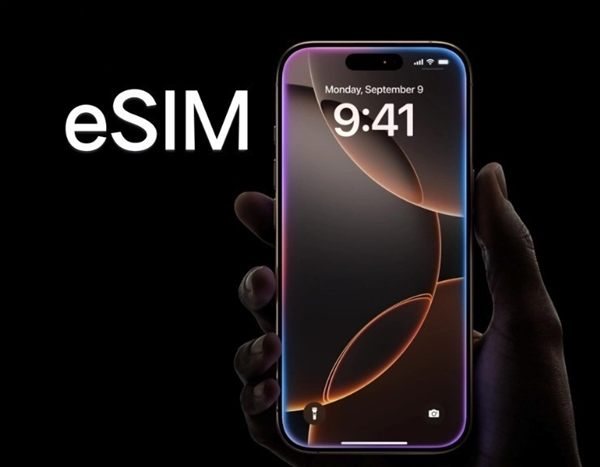
This fall, Apple’s upcoming iPhone 17 series is expected to usher in a milestone change – the entire series will be equipped with an eSIM card solution as standard, and the physical card slot will be directly eliminated in some markets.
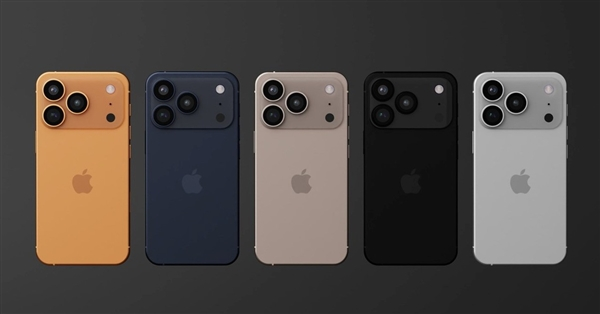
In fact, eSIM is not a new concept. It has long been popular in smart watches, tablets, and some Android flagship phones. For ordinary consumers, understanding the advantages of eSIM can not only help determine whether it is worth upgrading, but also help us adapt to future communication methods.
1. What is eSIM? What are the core differences between it and a physical card?
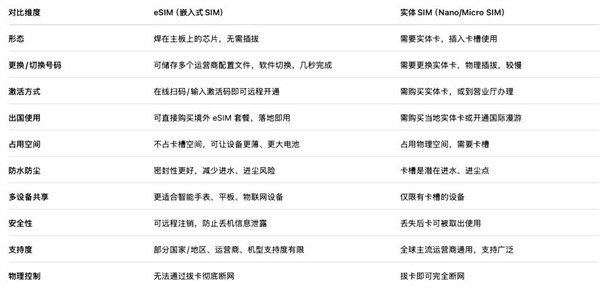
eSIM stands for Embedded SIM. It’s not the familiar little plastic card, but a microchip soldered to the phone’s motherboard. It performs the same authentication functions as a traditional SIM card. The difference is that eSIM doesn’t require a physical card slot; all carrier information and number bindings can be written and modified via software.
In the past, changing phone numbers or carriers meant removing the old card and inserting the new one, taking care not to damage the card slot and metal contacts. For some users, this process even required a card ejector or other tool. eSIM, however, completely digitizes these physical steps. Users can switch in seconds simply by scanning a QR code provided by the carrier through the phone’s “Settings” menu or entering an activation code. It makes “changing cards” a hands-free, software-based operation.
2 Changing numbers and carriers has never been easier
The limitation of traditional physical SIM cards lies not only in the hassle of plugging and unplugging, but also in the fact that they require face-to-face interaction between users and operators. For example, if you want to switch from China Mobile to China Unicom, you have to go to a business hall with your ID card and wait for staff to activate and deliver the new card. This is not only time-consuming but also often subject to business hall hours and geographical restrictions.
The advantages of eSIM are clear here: whether you’re at home, in the office, or even on a business trip, as long as your phone has an internet connection, you can switch directly to another carrier’s plan. For users who like to compare prices and seek low-cost plans, this is almost equivalent to “communication freedom.” For example, when traveling abroad, users can switch to a more suitable network service provider at any time based on the local carrier’s signal coverage and preferential rates, without worrying about wear and tear caused by inserting and removing the card slot or carrying multiple physical cards.
3. Cross-border travel is more efficient and the travel experience is comprehensively improved
If you frequently travel internationally or have overseas business needs, the convenience of an eSIM becomes even more apparent. In the past, many people would purchase a local SIM card at their destination airport or pre-purchase an international roaming data plan in China. These plans were either expensive or required waiting in line for purchase and activation, and the need to carefully store the card, which was smaller than a fingernail.
With eSIM, you only need to purchase an eSIM package from an overseas operator online before departure, and you can connect to the Internet immediately after arrival. More importantly, you can keep your main domestic number at the same time to receive verification codes, bank text messages, and important notifications without having to switch back and forth between two physical cards. This is almost an indispensable communication tool for people who need to handle work affairs across borders and manage accounts in multiple locations. For example, a businessman who frequently travels between China and Singapore can keep his local Singapore number to answer calls and use data, while allowing his domestic number to continue to send and receive WeChat and Alipay verification codes, so that the business in the two places can be seamlessly connected.
4. Optimize phone design to improve both protection and performance
The benefits of eliminating the physical SIM card slot include not only a cleaner exterior but also an optimized internal structure. While the card slot is small, it requires a certain amount of structural space, along with accessories like the card tray and sealing rubber ring, all of which take up valuable space within the phone.
In the design of flagship phones, every cubic millimeter may mean more battery capacity, larger heat dissipation components, or more powerful imaging modules. By eliminating the card slot, Apple can free up extra space for the iPhone 17 series, further improve battery life, or make greater optimizations in hardware such as cameras and speakers. In addition, the absence of a card slot means that the body has an additional natural protective advantage – one less possible entrance for water and dust to enter, making it easier to achieve an IP68 waterproof level or even higher standards. For users who often shoot and exercise outdoors, this is an invisible but important safety guarantee.
Finally, this is a security improvement. Physical cards can be easily pulled out, causing the device to lose network connectivity and affecting tracking functions such as “Find My iPhone.” However, eSIM is embedded in the motherboard and is more difficult to physically remove, thereby improving the effectiveness of anti-theft tracking.
5. Finally: The shift from card slots to the cloud
For iPhone users, the arrival of the eSIM isn’t just about eliminating a small card slot; it’s a technological leap from physical connections to cloud-based identities. It will make changing phone numbers more flexible, cross-border communications smoother, and enable thinner, lighter, and more secure phone designs. While the transition period may spark debate, looking back at history, from headphone jacks to optical drives, from physical keyboards to full-screen phones, every controversy has ultimately been resolved.
When will eSIM be available for Chinese mobile phones? It may be available in the second half of this year.

Kazam is Focused on creating and reporting timely content in technology with a special focus on mobile phone technology. Kazam reports, analyzes, and reviews recent trends, news and rumors in mobile phone technology and provides the best possible insights to enhance your experience and knowledge.