Samsung Galaxy S26 Ultra Breaks the AI Smearing Barrier in Mobile Photography
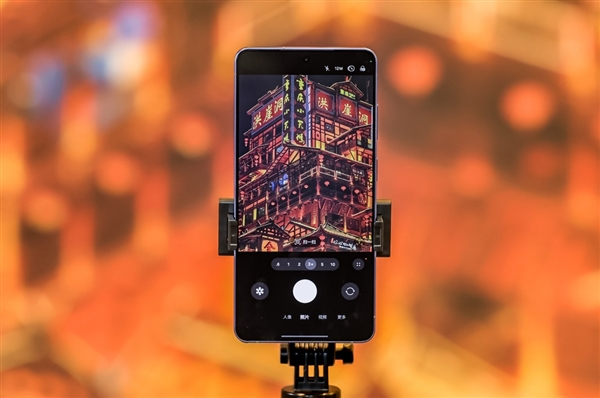
As mobile photography enters an era of intense AI competition, a strange phenomenon is spreading. More and more flagship models are becoming obsessed with using algorithms to “beautify” images, neglecting the essence of photography: restoring reality.
Open a photo, zoom in and you’ll find it full of blurry, blurred areas; skin texture loses detail; night scenes look like they’ve been overly “smoothed”; and the transition between highlights and shadows is abrupt and disjointed . The so-called “AI optimization” has ultimately become a tool to cover up hardware shortcomings.
Behind this lies the industry’s blind pursuit of rapid image output, and even more so, a departure from the essence of imaging. The arrival of the Samsung Galaxy S26 Ultra is like a breath of fresh air. With the unique strength of a major manufacturer, it achieves breakthroughs in optical hardware with solid performance, rejects excessive AI smoothing, and redefines the core strength of flagship imaging.
The AI Involution Dilemma: Smearing-style Optimization Deviates from the Essence of Image Processing
Samsung’s imaging philosophy has always been clear-headed and pragmatic: AI is not a panacea, and good hardware is the “get-out-of-jail-free card” for the imaging experience.
While most brands are busy iterating algorithms and piling on AI features, Samsung has chosen to return to the essence of imaging, focusing on upgrading optical hardware. After all, algorithms can refine details, but they cannot create light out of thin air; they can compensate for minor flaws, but they cannot salvage inherent optical deficiencies. The reason the Galaxy S26 Ultra can break free from the trap of AI enhancement lies in its “optical brute force,” addressing the core pain points of imaging at their source, ensuring that every detail in the image originates from real light capture, rather than the arbitrary guesses of algorithms.
Optical Violent Aesthetics: Building a Solid Foundation for Images with Physical Parameters
This confidence in “optical superiority” stems primarily from the powerful hardware capabilities of the Galaxy S26 Ultra. The 200MP wide-angle main camera, the core of its imaging system, boasts a 47% increase in light intake compared to its predecessor, while the 50MP telephoto lens also sees a 37% increase. These two key improvements mean the camera can capture a massive amount of light and detail, achieving a qualitative leap in image quality at a physical level.
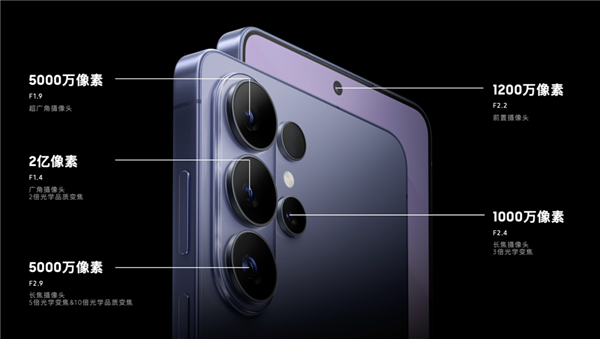
Unlike some models that blindly pile on features “for the sake of a large sensor” or “for the sake of pixels,” Samsung’s hardware upgrades always revolve around the actual shooting scenarios of users. The core of the Galaxy S26 Ultra’s lens upgrade is to solve the pain points that users encounter most often, such as poor low-light imaging, loss of detail, and blurry zoom.

With a larger aperture and an optimized sensor, the Galaxy S26 Ultra can deliver a clean and clear picture in low-light environments without relying on algorithmic noise reduction. Texture details in dark areas are clearly discernible, and hair and skin tones are rendered naturally, eliminating the blurring and smearing caused by excessive algorithmic noise reduction.
This extreme exploitation of hardware capabilities is even more evident in dynamic video recording. While some models are still trying to cover up motion blur with large-scale image cropping and crude electronic image stabilization algorithms, the Galaxy S26 Ultra directly pulls out a “physical add-on”.

The upgraded Super Steady Mode introduces a powerful level lock function. It no longer relies solely on algorithms to guess image movement, but directly utilizes underlying physical components—precisely calculating gravity using real-time gyroscope and accelerometer data—to achieve 360-degree automatic horizon correction, ensuring the image remains absolutely level. Whether shooting running, cycling, or high-speed extreme sports scenes like skateboarding, it effectively avoids image tilt and shake. This rock-solid stability, stemming from precise calculations by physical hardware, is far more impressive than purely algorithmic forced corrections.
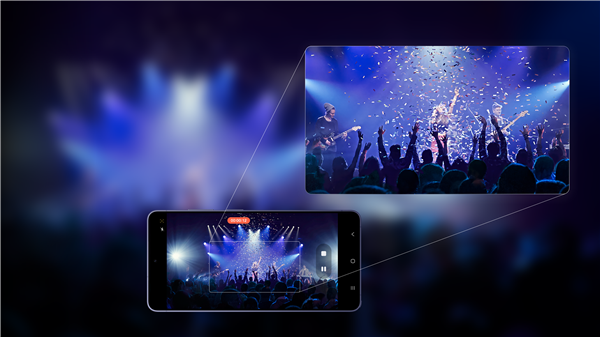
Furthermore, the S26 Ultra also rejects the “digital magnification” approach that sacrifices image quality when capturing dynamic subjects. It features an automatic composition function that supports 4K lossless image quality. The underlying support for this remarkable feature stems from its top-tier 8K sensor. Leveraging the massive amount of redundant optical data captured by this large sensor, combined with real-time AI processing technology, the phone can effortlessly track subjects within a wide viewfinder. While achieving smooth, intelligent composition, it still outputs truly lossless 4K image quality. This is what you call “hardware as the foundation, algorithms as the bloom”!
Precise control of computing power: Core technology empowers the system to ensure that no detail of light is wasted.
Powerful optical hardware relies on the precise control of top-tier computing power. Without sufficiently powerful chips, even the most abundant light and details cannot be processed efficiently.
The Samsung Galaxy S26 Ultra is equipped with a new generation of custom processor—the fifth-generation Snapdragon® 8 Ultra mobile platform (for Galaxy), in which the NPU, which serves as the “brain” of Galaxy AI, has a 39% performance improvement, the GPU performance has a 24% improvement, and the CPU performance has a 19% improvement.

It’s important to understand that processing 200-megapixel high-definition images and the massive amount of light data resulting from a 47% increase in light intake places extremely high demands on the chip’s computing power. Ordinary chips either cannot handle this or will experience stuttering and latency. However, the custom chip in the Galaxy S26 Ultra, especially the leapfrog upgrade of the NPU, allows this massive amount of data to be processed quickly and accurately, ensuring both extremely fast imaging response and preserving the realistic texture captured by the light to the maximum extent.
What’s even more commendable is that Samsung has always maintained restraint and rationality in its use of AI. Unlike competitors’ “out-of-place” AI enhancements, the upgraded AI ISP of the Galaxy S26 Ultra always focuses on “restoring reality,” relying on its powerful hardware foundation to make “icing on the cake” optimizations rather than “substituting the main components.”

The selfie camera faithfully reproduces hair texture and natural skin tone even in complex lighting conditions. While the photo assistant function supports adding elements and adjusting backgrounds using natural language commands, it always automatically corrects lighting, contrast, and shadow effects to ensure that added content blends naturally with the original image without leaving any artificial AI traces. This restraint is a testament to respect for the authenticity of images.
Advanced Professional Level: The Value of APV Begins with Top-Tier Optical Quality
This concept of “hardware as the skeleton and AI as the soul” is even more evident in the field of professional video creation.
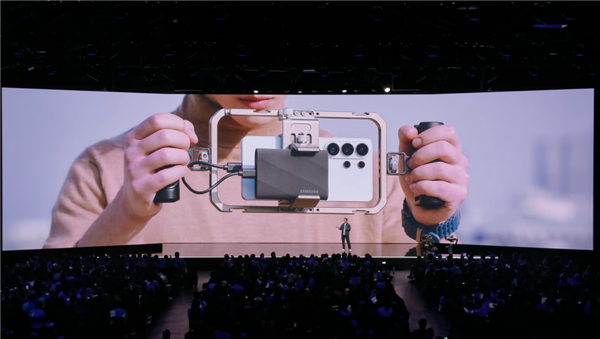
The Samsung Galaxy S26 Ultra is the first Galaxy device to support the APV professional video standard and encoding format. The true value of APV lossless encoding relies heavily on the Galaxy S26 Ultra’s top-tier optical hardware—if the original footage lacks sufficient optical quality, the lossless format will only retain more noise and imperfections, thus losing its professional purpose. Samsung has consistently strived to bring high-specification video recording to mobile phones, and now, through real-time AI processing technology based on a large sensor and professional-grade encoding, professional video creation is no longer exclusive to professional equipment, ensuring that every creation retains the most realistic image quality.
Back to the basics: The imaging prowess of a flagship Android phone lies in its light and core technology.
In an era saturated with AI-powered imaging, the Samsung Galaxy S26 Ultra is more like a “fundamentalist” when it comes to imaging. It doesn’t blindly follow the trend of piling on AI features, nor does it rely on algorithms to cover up hardware shortcomings. Instead, it always adheres to the original intention of “optics as the foundation,” using “optical brute force” to reconstruct the cornerstone of imaging, and using restrained AI optimization to restore the essence of images.
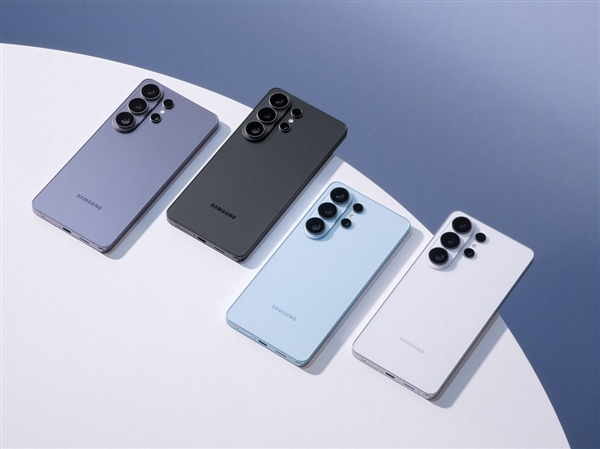
Its emergence proves to the market that the best AI imaging is always built on the best optical hardware; true flagship imaging should not be a “production line product” of algorithms, but a true representation of light and detail.
While other brands are still debating the “fake sophistication” achieved through AI enhancement, the Samsung Galaxy S26 Ultra has already demonstrated the right answer for flagship imaging: true imaging strength lies not in the power of algorithms, but in solid hardware; true AI optimization lies not in how many details it can “draw,” but in how much realism it can “reproduce.” Rejecting AI enhancement and returning to the essence of optics is not only the source of the Galaxy S26 Ultra’s confidence in breaking through industry barriers, but also the vision and responsibility befitting an Android flagship.

Kazam is Focused on creating and reporting timely content in technology with a special focus on mobile phone technology. Kazam reports, analyzes, and reviews recent trends, news and rumors in mobile phone technology and provides the best possible insights to enhance your experience and knowledge.