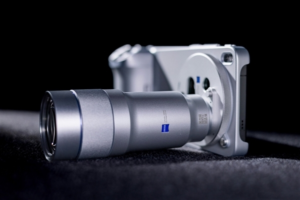
vivo X300’s temperature control is impressive in real-world testing: Dimensity 9500’s high-efficiency design is key.

In the past, it was generally believed that flagship imaging cameras were limited by the amount of components used in the camera module, resulting in compromises in battery life and performance, especially when playing games frequently, they would get very hot.
However, this perception was recently challenged by the vivo X300, which is equipped with MediaTek Dimensity 9500. As a flagship imaging phone that focuses on photography, it not only maintained a very stable frame rate in actual game testing, but also remained cool to the touch after playing three popular games continuously.
According to the actual test by blogger “Electronic Wizard Sam”, after running three mainstream mobile games, namely “Honor of Kings”, “Peacekeeper Elite” and “Genshin Impact”, for 1.5 hours in a room temperature of 23℃, the highest temperature of the camera, middle and rear areas of the phone did not exceed 34℃, which is even better than some models that are mainly for e-sports.
According to the actual test data, the initial temperature of the front body of the vivo X300 is uniform, with the camera, middle, and rear areas all between 27.5℃ and 27.7℃.
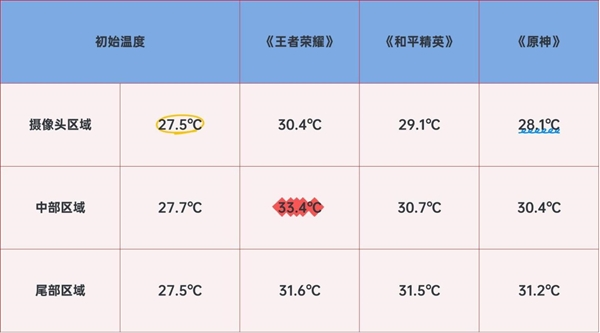
After two rounds of “Honor of Kings”, the temperature in each area only rose to 28.1℃-30.4℃; after one round of “Peacekeeper Elite”, the highest temperature appeared in the camera area, at 33.4℃.
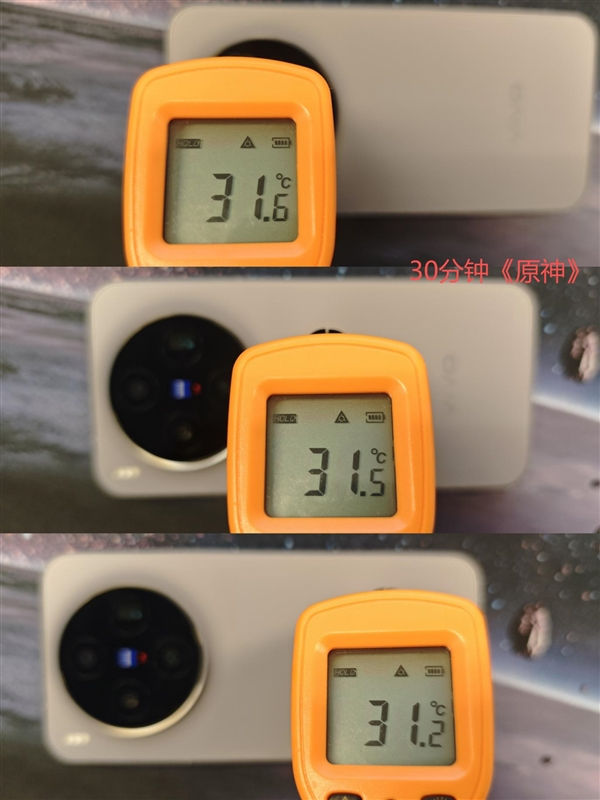
Even during 30 minutes of intense gameplay of Genshin Impact, the overall body temperature remained stable at 31.2℃-31.6℃, with the temperature difference controlled within 6℃, and there was no noticeable burning sensation when holding it for a long time.
This dual performance of “flagship imaging + cool gaming” is inseparable from the high-efficiency design of the MediaTek Dimensity 9500 chip and vivo’s targeted heat dissipation optimization.
It is worth noting that this performance is also deeply coordinated with the Ice Pulse Fluid VC cooling system on the vivo X300. This cooling solution, which covers 85% of the motherboard area, uses aerospace-grade phase change materials and graphene composite heat sinks to quickly conduct heat from the chip. Compared with conventional solutions, it can reduce the body temperature by another 5°C, thus “escorting” the performance release of the Dimensity 9500.
Of course, the Dimensity 9500’s performance and energy efficiency are the foundation of the vivo X300’s outstanding performance, achieving a balance between “high performance and low heat generation”.

The core lies in its end-to-end high-energy-efficiency design from architecture to process. First, in terms of process technology, the chip adopts TSMC’s third-generation 3nm process, which increases transistor density by 20% compared to the previous generation and reduces power consumption by 42% at peak performance, reducing heat generation from the hardware level.
The CPU architecture adopts a groundbreaking all-large core layout, with a combination of one 4.21GHz C1-Ultra super-large core, three C1-Premium large cores, and four C1-Pro large cores. This combination can accurately match different load requirements such as games and videos through gradient scheduling, and can also achieve a 55% peak energy efficiency improvement of the super-large cores, avoiding ineffective heat generation caused by “performance overkill”.
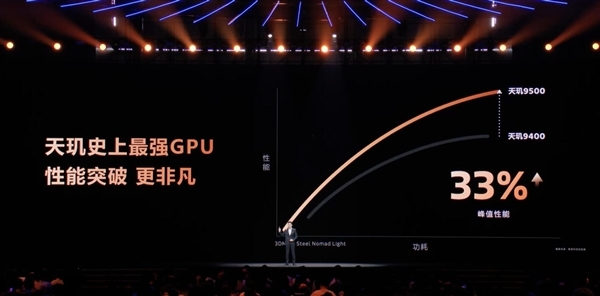
Energy efficiency optimization at the GPU level is equally crucial. The Mali-G1-Ultra GPU in the Dimensity 9500 not only supports 120fps ray tracing rendering on mobile devices, but also innovatively adopts a Dynamic Cache architecture. By unifying CPU/GPU/NPU caching and optimizing data scheduling, the graphics bandwidth usage is reduced by 30%. Combined with hardware-level touch latency optimization, in the high-quality, high-frame-rate mode of Genshin Impact, it can stabilize frame rate fluctuations and significantly reduce power consumption compared to the previous generation.
In addition, the chip’s integrated second-generation Dimensity scheduling engine can adjust computing power output in real time according to game scenarios. For example, it can automatically increase GPU performance in team battles in “Honor of Kings” and reduce core frequency in standby mode to further reduce redundant heat generation.
Beyond gaming, the Dimensity 9500’s high energy efficiency is also evident in multitasking and image processing. Its supported 4-channel UFS 4.1 flash memory architecture improves AI model loading efficiency by 40% and doubles the loading speed of large applications, without requiring additional power consumption.

When processing 200-megapixel image calculations and recording 4K cinematic portrait videos, the high-efficiency NPU can reduce power consumption by 33% through mixed-precision computing technology, achieving image creation without overheating.
This balance of energy efficiency across all scenarios allows the vivo X300 to maintain the professional capabilities of an imaging flagship while also possessing the cool performance of a gaming phone, completely breaking the industry norm of “feature bias leading to a lack of user experience”.
For consumers, this means that when choosing a mobile phone, they no longer need to compromise between photography and gaming. Models like the vivo X300 can achieve an all-around experience of “having your cake and eating it too” thanks to the synergistic innovation of the Dimensity 9500 chip and the terminal.

Kazam is Focused on creating and reporting timely content in technology with a special focus on mobile phone technology. Kazam reports, analyzes, and reviews recent trends, news and rumors in mobile phone technology and provides the best possible insights to enhance your experience and knowledge.