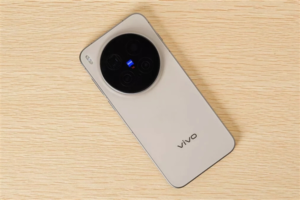
Surge OS 4 will partially adopt a self-developed architecture while retaining native Android services.
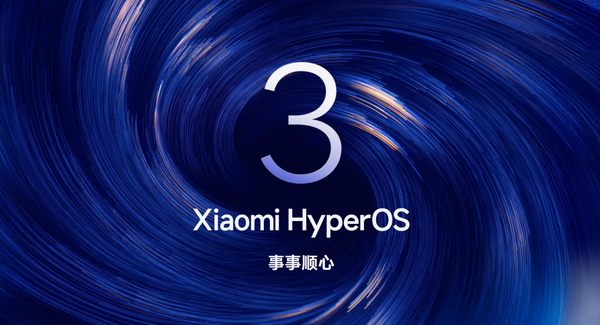
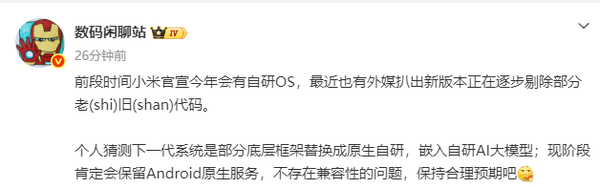
The blogger Digital Chat Station posted that Xiaomi had previously announced that it would launch its self-developed OS this year. Recently, the media has made new discoveries that Xiaomi’s new version of the system is gradually removing some old code. This move has attracted widespread attention from the outside world regarding the progress of Xiaomi’s self-developed system.
Digital Chat Station predicts that Xiaomi’s next-generation system may replace some of its underlying framework with a native, self-developed one and embed a self-developed AI model. At the same time, it’s highly likely that native Android services will be retained at this stage to avoid compatibility issues; therefore, we advise everyone to maintain reasonable expectations.
Previously, the 2025 Xiaomi “Ten Million Technology Award” ceremony was held at the Xiaomi Science and Technology Park in Beijing. Xiaomi’s self-developed chip “Xuanjie O1” won the highest award, and Lei Jun, founder, chairman and CEO of Xiaomi Group, personally presented the award.
At the awards ceremony, Lei Jun revealed an important piece of information: In 2026, Xiaomi expects to achieve a “grand convergence” of self-developed chips, self-developed OS, and self-developed AI large-scale models on a single terminal.
According to foreign media outlet XIAOMITIME, Xiaomi is actively optimizing its system code. Some system modules in HyperOS 3.1, such as Weather and Photo Album, have begun removing the MIUI-era SDK.
The HyperOS 4, released in August this year, is expected to become the first truly “zero legacy” system version.
In addition, Xiaomi has begun to try rewriting the core system applications using Google’s Flutter toolchain and Rust language in HyperOS 3.1, which marks a step towards modular application design in the system architecture.
This system primarily serves as a transitional measure, introducing the native HyperOS SDK while retaining the MIUI SDK to ensure system stability and compatibility during the upgrade process.

Kazam is Focused on creating and reporting timely content in technology with a special focus on mobile phone technology. Kazam reports, analyzes, and reviews recent trends, news and rumors in mobile phone technology and provides the best possible insights to enhance your experience and knowledge.