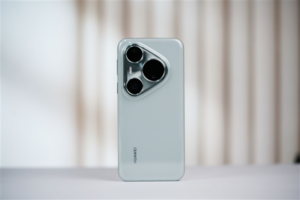
Huawei Mate 80/X7 debuts emergency communication without network connectivity!
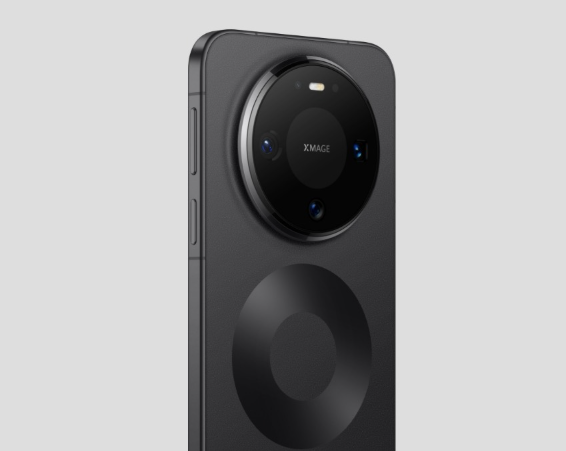
At the end of November, Huawei released the Mate 80 series and Huawei Mate X7, with the new phones being the industry’s first to feature 700MHz emergency communication without a network.
In situations where there is no signal or base station failure, such as urban disasters or outdoor rescue operations, the network-free emergency communication system supports connections up to 13 kilometers away and can penetrate three walls, providing reliable support for emergency communications.
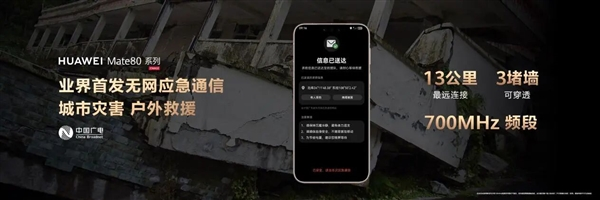
Recently, China Broadcasting Network (CBN) issued a statement saying that it is using 700MHz low-frequency resources as a technological foundation to promote the innovative development of “emergency communication without network”.
It is said that 700MHz is known as the “golden frequency band”. As the core low-frequency resource operated by China Broadcasting Network, it has advantages such as long signal propagation distance, strong diffraction ability and excellent penetration performance.
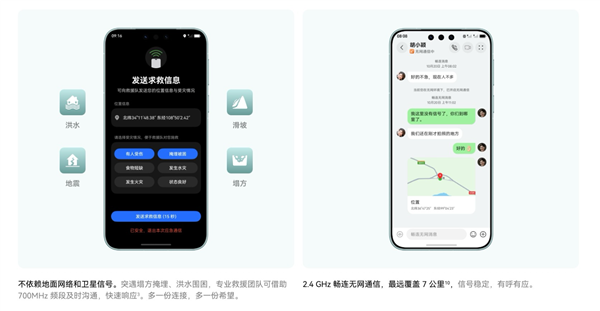
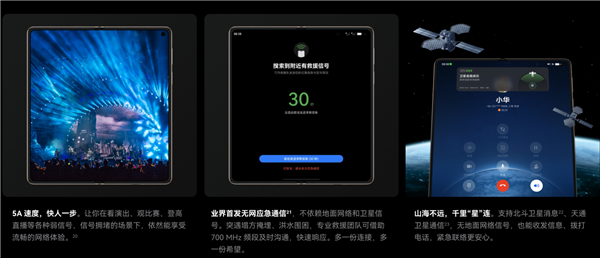
The emergency communication solution built on this frequency band does not rely on the original cellular architecture. Even in extreme environments such as mountains, forests, and ruins, it can penetrate multiple layers of walls or concrete structures to accurately reach trapped personnel, becoming the most reliable life beacon in despair.
China Broadcasting Network stated that when communication in the disaster area is completely interrupted, rescue teams can carry out search and rescue operations with dedicated terminals. The mobile terminals automatically identify the environmental conditions and continuously search for rescue signals in the background.
Once connected, users can report location information and send messages, allowing the command center to dynamically grasp the distribution of the disaster and achieve precise dispatch.
At the same time, rescue teams can proactively call for help, guide self-rescue, avoid secondary injuries, and significantly improve search and rescue efficiency and survival rate.

Kazam is Focused on creating and reporting timely content in technology with a special focus on mobile phone technology. Kazam reports, analyzes, and reviews recent trends, news and rumors in mobile phone technology and provides the best possible insights to enhance your experience and knowledge.