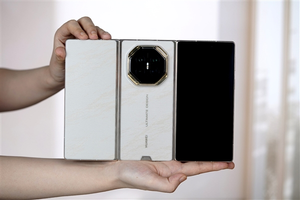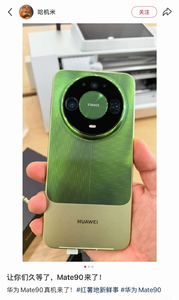
Huawei Mate XT2’s tri-fold design skips the Kirin 9030:
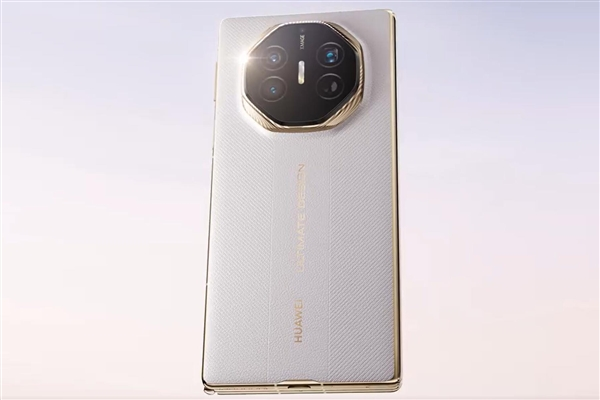
Huawei’s new generation of Kirin chips were first used in Mate flagship phones, but this year is different.
According to blogger Dingjiao Digital, the Huawei Mate XT2 tri-fold folding phone will debut with a new generation Kirin chip based on the Tao Law, just like the Mate 90 series. This means that Huawei’s tri-fold folding phone will skip the Kirin 9030 series and directly use Huawei’s most powerful SoC.

Back in September of last year, Huawei released the tri-fold screen Mate XTs. At the launch event, Yu Chengdong, Huawei’s Executive Director and Chairman of the Consumer Business Group, announced that the phone would be equipped with the Kirin 9020 chip. This was not only the first public appearance of the Kirin 9020, but also the first time the Kirin chip had appeared at a Huawei launch event in four years since 2021.
Huawei’s public disclosure of the chip model reflects its achievement of full-chain self-reliance and control in the semiconductor field, and the basic formation of a supply chain security barrier. A year later, Huawei’s new generation of tri-fold Mate XT2 will be the first to feature a Kirin chip equipped with complete “Tao Law” technology.
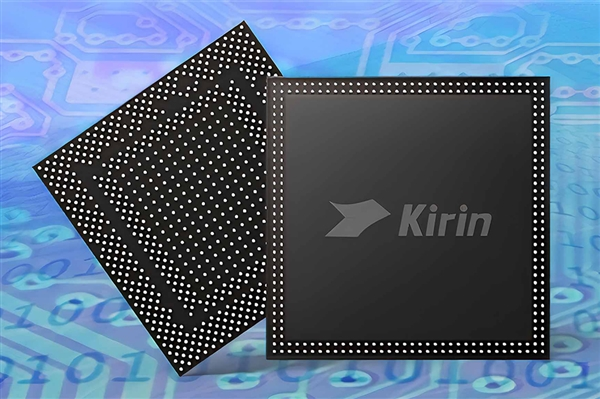
This marks the beginning of a completely new technological path for Huawei in the semiconductor field. The core of Tao’s Law is to replace the traditional Moore’s Law’s “geometric shrinkage” with “time shrinkage.” Its key lies in “logic folding” technology, which extends the traditional planar circuit from a single layer to a two-layer architecture, thereby significantly compressing signal propagation delay and improving the overall performance of the chip.
According to the disclosed test data, compared with the Kirin 9030 Pro which adopts a traditional planar design, the new generation of Kirin chips has increased the transistor density from 155 million per square millimeter to 238 million per square millimeter at the same process node, an increase of 55%.
The successful mass production of the “Tao Chip” not only verifies the feasibility of this technical route, but also provides a new possibility for domestically produced chips to break through the limitations of traditional processes. The new product will be officially released in September.

Kazam is Focused on creating and reporting timely content in technology with a special focus on mobile phone technology. Kazam reports, analyzes, and reviews recent trends, news and rumors in mobile phone technology and provides the best possible insights to enhance your experience and knowledge.