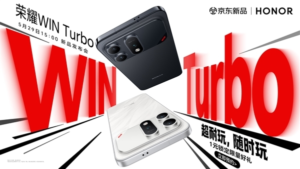
3DMark removed a well-known Chinese mobile phone from its benchmark rankings
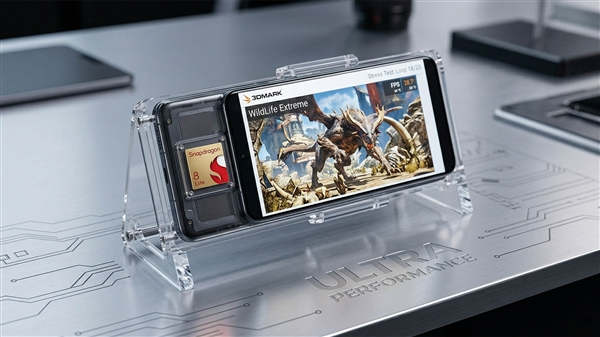
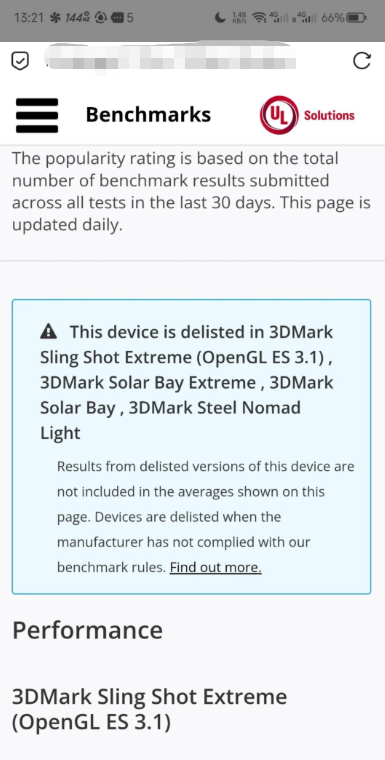
Fast Technology reported that the well-known benchmarking platform 3DMark recently made a decision to remove a flagship model from the official list of a well-known Chinese mobile phone manufacturer.
The platform’s reason was that the brand had engaged in “cheating” during benchmark tests. However, the truth of the matter is completely different from the public’s perception of benchmark fraud.
The brand in question simply unleashed all the hardware’s performance limits during the test, allowing the chip to run at its maximum capacity throughout the entire test. This practice was directly classified as cheating by 3DMark.
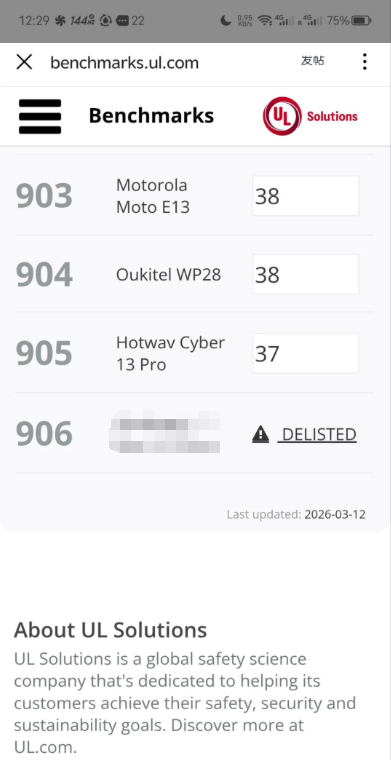
In recent years, large-size heat sinks, liquid cooling, and even active fan solutions have rapidly become widespread, giving mobile phone manufacturers more confidence to push the performance limits of flagship chips. For example, models equipped with the Snapdragon 8 Elite Gen 5 chip, thanks to their powerful heat dissipation configuration, can not only maintain high frame rates in various AAA mobile games, but can even smoothly run games that were originally only compatible with consoles through emulators.
For these phones that are packed with heat dissipation hardware, the core value is to allow the chip to run at full capacity without any reservations. This is also the core of the product design of this domestic mobile phone brand.
With this in mind, the brand has directly relaxed all security thresholds for chip operation in its models. As long as the phone detects that benchmark software such as 3DMark is running, the chip will always be locked at the highest performance level.
Even if the chassis temperature continues to rise, the system will not reduce the frequency or lock performance to control the temperature. However, this design crosses the line of 3DMark’s rules. The platform does not recognize this practice and equates it with benchmark cheating.
When this news first broke, the industry insiders and netizens initially thought it was just another routine tactic used by domestic manufacturers to make benchmark scores look better. After all, in recent years, it’s been commonplace in the mobile phone industry to perform special optimizations for benchmark software or even use inflated scores to attract attention.
Everyone assumed this would be the same old story, until a Reddit user spoke out, bringing the full truth to light.
A user with the ID Scared-Department629 posted a thread clarifying the core reason why the model was removed from the list. He stated it very clearly:
The phone’s hardware capabilities are fully capable of achieving the scores obtained from 3DMark, so there is absolutely no evidence of data manipulation. The only reason 3DMark judged it to be cheating is that it completely ignored the hardware’s preset safe operating limits during the benchmark process, pushing the hardware to its performance limits regardless of how high the body temperature rose. This is defined as cheating according to the platform’s rules.
P.S. Some research institutions have found that many manufacturers send media units to review agencies with higher power consumption limits, resulting in slightly better performance than the retail versions sold to consumers.
WCCFTech believes that 3DMark’s decision to remove this Chinese mobile phone brand from the market will not fundamentally change its product and sales strategies. In today’s smartphone market, it is one of the few manufacturers that simultaneously incorporates a large heat dissipation plate, active cooling fan, and liquid cooling solution into its flagship phones. Ultimate performance release has always been the core selling point of its products.
As everyone can expect, this brand will come up with more complex and advanced heat dissipation solutions in the future, enabling mobile phone processors to operate stably under higher power consumption and continue to push the performance potential of hardware to the limit.
Ultimately, this issue boils down to a fundamental disagreement between mobile phone manufacturers and benchmarking platforms regarding the understanding of “performance release.”
Manufacturers believe that since they have put together top-notch cooling solutions, they should let users see the true limits of their hardware.
The platform believes that performance release detached from daily use scenarios fails to reflect the user’s real experience and is therefore misleading to consumers .
This disagreement will most likely continue as mobile phone hardware upgrades.

Kazam is Focused on creating and reporting timely content in technology with a special focus on mobile phone technology. Kazam reports, analyzes, and reviews recent trends, news and rumors in mobile phone technology and provides the best possible insights to enhance your experience and knowledge.