Huawei Mate 90 series launch event moved up: First batch to feature Kirin 9050 Pro
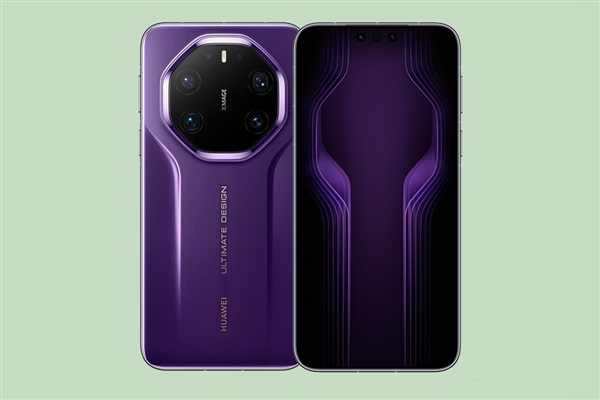
According to Fast Technology on September 9, blogger Super Dimension revealed that the Huawei Mate 90 series launch event has been moved up to September 15, instead of the previously rumored September 23.
It is worth noting that September 15th is not only the founding date of Huawei, but also the date of the chip supply disruption. In 2020, due to the so-called sanctions imposed by the United States, Huawei’s Kirin high-end chips could no longer be manufactured after September 15th, 2020.
As one of the world’s leading mobile phone manufacturers and 5G equipment suppliers, Huawei has broken through the encirclement and re-entered the 5G mobile phone market with the Mate 60 series, despite heavy pressure from the United States. Therefore, September 15th is a very special day for Huawei.

Huawei is about to launch its new flagship Mate 90 series, which is expected to include four models: a standard version, a Pro version, a Pro Max version, and an RS version. This phone will be among the first to be equipped with the Kirin 9050 Pro, Huawei’s most powerful mobile chip to date.
In May of this year, Huawei proposed a new principle guiding the development of the semiconductor industry, namely the “Tao (τ) Law.” Its core is to replace geometric shrinkage with time (τ) shrinkage, continuously compressing signal propagation latency through innovative technologies such as logic folding, thereby improving transistor density and system performance. The Kirin 9050 Pro chip is the first high-performance chip to fully adopt logic folding technology.
In terms of configuration, the Kirin 9050 Pro’s CPU uses the Lingxi architecture, which improves single-core performance by 24% and multi-core performance by 52%, enabling it to more accurately match different usage needs.
The GPU component uses the Maliang GPU, which supports hardware-level real-time ray tracing. The overall rendering performance is 142% higher than the previous generation, and it also achieves a significant improvement in the processing efficiency of high-load complex graphics operations.

Kazam is Focused on creating and reporting timely content in technology with a special focus on mobile phone technology. Kazam reports, analyzes, and reviews recent trends, news and rumors in mobile phone technology and provides the best possible insights to enhance your experience and knowledge.