Official explanation of why the Xiaomi 18 Fold is so powerful.
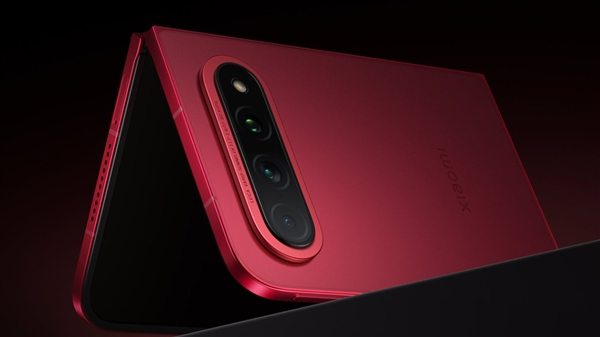
Fast Technology reported that the Xiaomi 18 Fold mid-folding phone has been officially released, priced from 10,999 yuan. This is Xiaomi’s most powerful folding screen phone ever, and also Xiaomi’s most high-end phone to date.
Previously, the most criticized issues with foldable screens were reliability and creases. This time, Xiaomi has significantly reduced creases by using a new generation of keel hinge and double-layer UTG glass.
Reliability has always been a challenge in the industry, with flexible materials, precision stacking, and various complex operating conditions. Xiaomi built a complete simulation system for the 18 Fold, paired with multiple sets of high-precision physical testing equipment, forming a simulation-actual test closed loop, which greatly improves the overall reliability of the device.
The simulation system covers 67 types of engineering projects, including water droplet shapes, bending, falling, squeezing impact, and creases, with an engineering coverage rate of nearly 100%. The falling scenario alone covers 10,437 angles, with a total of over 240,000 simulation operations and a secondary falling simulation accuracy rate of over 95%.
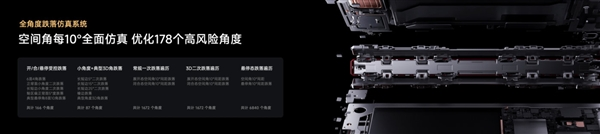
By relying on forward DOE joint optimization, the system simultaneously seeks optimization for four major scenarios: drop, bending, compression, and crease, outputting 492 key design improvement solutions and identifying 178 high-risk working conditions, thus avoiding the problem of neglecting one aspect when optimizing a single parameter.
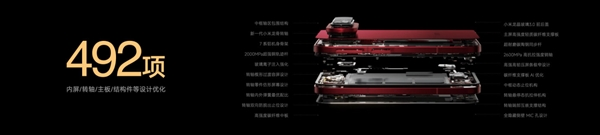
The accuracy of the simulation depends on the underlying physical test input, and Xiaomi has built multiple sets of self-developed testing equipment:
1. Hopkinson bar testing system: Transplanting aerospace testing equipment to obtain mechanical parameters of hundreds of materials under high-speed impact, providing basic model input for simulation;
2.3D motion capture system: a high-speed camera with millions of frames per second captures microscopic deformations at the 0.01mm level during the drop process to verify the simulation model;
3. Laser-guided ball-dropping system: landing point positioning accuracy of 0.1mm, completing impact tests on key areas of the screen.
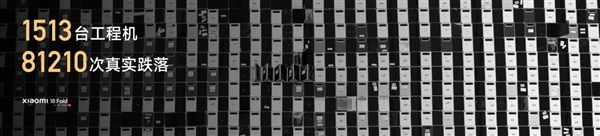
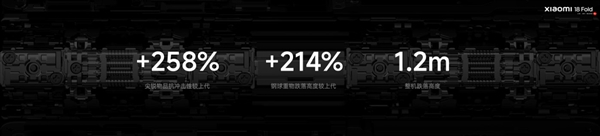
The design scheme derived from digital simulation also needed to be verified by real prototypes: 1,513 engineering units were used to complete 81,210 real drop tests. Ultimately, the whole device achieved a drop resistance of 1.2 meters, with reliability approaching that of a candybar phone, and the impact resistance of the inner screen was significantly improved.
The simulation system simultaneously optimizes the hinge opening and closing feel, draws the optimal feel force curve based on human factors research, simulates hinge torque and screen rebound force, and combines with Haierbeck magnetic array magnetic circuit optimization, reducing magnet volume by 30% and reducing magnetic leakage by 75%, achieving smooth opening and closing and stable hovering.

Kazam is Focused on creating and reporting timely content in technology with a special focus on mobile phone technology. Kazam reports, analyzes, and reviews recent trends, news and rumors in mobile phone technology and provides the best possible insights to enhance your experience and knowledge.