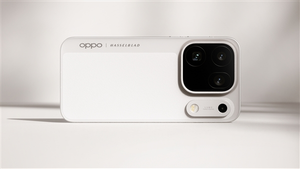
OPPO A7 Pro Max is ready: OPPO’s first phone with a 10,000-level battery.

According to Fast Technology on July 20th, since the end of last year, the mobile phone industry has quietly launched a race for battery capacity. If 7000mAh batteries will still be a rarity in 2025, then by 2026, 8000mAh or even tens of thousands of mAh batteries will have become the norm in the market.
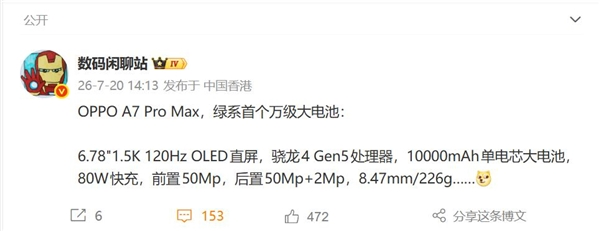
Several brands have successively launched mass-produced models equipped with large batteries exceeding 10,000 mAh, and OPPO’s first new phone with such a battery, the OPPO A7 Pro Max, is also on its way. The blogger Digital Chat Station has leaked the detailed specifications of this phone in advance.
Specifically, the OPPO A7 Pro Max features a 6.78-inch 1.5K resolution 120Hz OLED flat screen, a Qualcomm Snapdragon 4 Gen5 processor, a built-in 10000mAh high-capacity battery, and supports 80W fast charging.
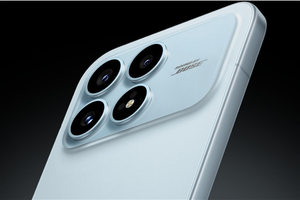
In terms of imaging, the phone features a 50-megapixel front-facing camera and a dual-camera system on the rear consisting of a 50-megapixel main camera and a 2-megapixel secondary camera, meeting daily shooting needs.
It is understood that the OPPO A7 Pro Max’s large battery uses a single-cell solution. Its core advantages lie in higher space utilization and energy conversion efficiency.
By eliminating the need for connecting cables and step-down circuits required by the dual-cell solution, the battery capacity of the single-cell solution can be increased by about 5% to 8% in the same volume, with lower energy loss and better overall energy efficiency.
While achieving a massive battery capacity, the OPPO A7 Pro Max weighs only 226 grams and is 8.47 millimeters thick, making it lighter and thinner than the iPhone 17 Pro Max. In comparison, the latter weighs 231 grams, is 8.75 millimeters thick, and has a battery capacity of only 4823 mAh.
For the industry, this round of battery competition is far more than a simple “numbers game.” At the technological level, the industrialization of silicon-carbon anode materials is a key breakthrough. By increasing the silicon content in the anode, the energy density of the battery can be significantly increased, thus resolving the contradiction between large batteries and slim designs.
From an experience perspective, as smartphones become the 24/7 platform for work, entertainment, and AI applications, battery anxiety has consistently ranked among the top three user pain points for five consecutive years, and large batteries are undoubtedly the most direct solution. With the gradual maturation of silicon anode technology and the continuous decline in costs, the widespread adoption of large batteries will completely rewrite users’ perceptions of smartphone battery life.

Kazam is Focused on creating and reporting timely content in technology with a special focus on mobile phone technology. Kazam reports, analyzes, and reviews recent trends, news and rumors in mobile phone technology and provides the best possible insights to enhance your experience and knowledge.