10000mAh battery mobile phone will be launched next year, and the era of power bank is coming to an end

Netizens who follow the mobile phone industry may find that “battery” and “battery life” have become one of the most frequently used words in the industry this year.
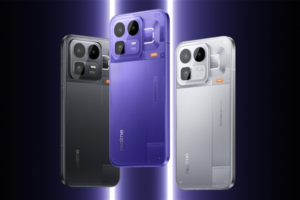
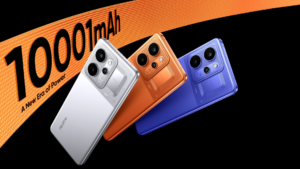
In April of this year, the Honor Power series entered the mid-range market with an 8,000mAh battery, topping the 2,000-2,500 yuan price range in its first week. Shortly thereafter, realme shocked the industry when it unveiled a concept phone with a massive 10,000mAh battery.
This model, which is only 8.5mm thick and weighs 210g, has proven with actual data that it is possible to have a large battery capacity and a thin body. Recently, CNMO noticed that according to leaks, the next generation of the Redmi Note series will be equipped with an 8300mAh battery, aiming to become the “king of battery life in the thousand-yuan phone”
According to incomplete statistics, by the second half of 2025, major mobile phone manufacturers are expected to release at least four models with battery capacities of 8,000mAh or higher. It is expected that mass-produced models with ultra-large 10,000mAh batteries will officially debut in 2026. Simply put, the Chinese smartphone industry will soon enter the 10,000mAh era.
The exponential growth of mobile phone battery capacity is reshaping users’ electricity usage habits. When a phone can easily last three days on a single charge, and when 10,000mAh models completely eliminate battery life concerns, will traditional power banks become a thing of the past? This “power revolution” initiated by mobile phone manufacturers may be rewriting the rules of the game in the mobile energy market.
A revolution in mobile phone battery life
The exponential growth in mobile phone battery capacity is driven by breakthroughs in materials science. For example, the Realme 10,000mAh concept phone utilizes battery technology with a 10% silicon content, achieving an energy density of 887Wh/L, a nearly 20% increase over traditional graphite batteries. This performance is driven by key breakthroughs in silicon-based anode technology—its theoretical capacity is 10 times that of graphite, but its high expansion rate has long hindered its commercial application. Through nano-coating technology, Realme has successfully increased the silicon content to 10%, achieving a significant increase in energy density while maintaining cycle life.
Honor’s Qinghai Lake battery takes a differentiated approach. Its 8000mAh battery uses a silicon-carbon composite anode and boasts an energy density of 821Wh/L. Official data indicates that the Honor Power, equipped with an 8000mAh Qinghai Lake battery, can provide 14 hours of continuous gaming, making it one of the longest-lasting models in the industry at the time of its release.

Market feedback indicates that Honor Power achieved first place in the 2,000-2,500 yuan price range in its first week of sales, and ranked third across all price ranges with a 13.7% market share. The Honor X70, with its 8,300mAh battery, maintained its top-selling position across all platforms for 10 consecutive days. While high sales figures cannot be attributed solely to the larger battery, these data demonstrate that user demand for “power freedom” has translated into purchasing power.
Supply chain sources indicate that this “arms race” is accelerating downward: the next generation of the Redmi Note series will come standard with an 8000mAh battery, priced around 1500 yuan (approximately US$250); the Realme Digital series also plans to offer 8000mAh batteries in the 1,000 yuan (approximately US$350) price range. The ultimate goal is clear: to ensure that all users, regardless of budget, can enjoy the comfort of a “three-day charge” battery.
The power bank industry is facing crises
The leap forward in battery technology in the mobile phone industry has plunged the power bank industry into unprecedented difficulties. This begins with the personal power bank industry. As a leading brand in this field, ROMOSS has been plagued by recent quality issues. In June 2025, it announced a recall of 490,000 power banks, affecting three main models. The news quickly became a trending topic on platforms like Weibo and Douyin. Data from the Black Cat complaint platform shows that 45% of ROMOSS complaints received in the past year involved safety hazards such as battery swelling and leakage. Several universities have even issued notices prohibiting the use of ROMOSS power banks. This series of incidents has not only severely damaged the brand’s reputation but also raised doubts among some consumers about the quality control of the power bank industry.

The shared power bank market is also facing a precarious situation. When the “Three Electrics and One Beast” (Jiedian, Laidian, Xiaodian, and Monster Charging) market took shape in 2017, users viewed them as a “must-have for peace of mind” when traveling. However, over the past few years, price hikes have sparked controversy, with prices in some scenic spots and shopping districts soaring to 8-10 yuan per hour. The label of “power bank assassin” has completely shattered its reputation as a value-for-money company. More importantly, with smartphone battery capacities rapidly exceeding 8,000mAh and 10,000mAh, demand for on-the-go charging will soon decline significantly, and the shared power bank industry is poised to suffer the first wave of disruption.
Today, the power bank industry has reached a crossroads of change, and the magnetic ecological products launched by mobile phone manufacturers (such as Xiaomi magnetic bracket power bank and OPPO Mag magnetic energy card) are redefining the scenario value of “mobile energy” with a new form of “lightweight + functional integration”.
Magnetic Ecological Breakthrough
A revolution in power bank form factors is underway. Huawei, Xiaomi, OPPO, and other mobile phone manufacturers have already entered the magnetic power bank market, attempting to reshape user needs through “ecosystemization.”
Take OPPO, for example. When the OPPO Find X8 Ultra was released, it simultaneously launched the OPPO Mag Magnetic Ecosystem 2.0, which includes products such as magnetic protective cases, the Magnetic Energy Card Air power bank (5000mAh), and magnetic assembly cables. Earlier this year, Xiaomi was also rumored to be promoting the Magnetic Ecosystem 2.0, which may be deeply integrated with its next-generation flagship model, the Xiaomi Mi 16, to support magnetic wireless charging, magnetic external lenses, and other accessories.
Recently, Xiaomi launched the “Magnetic Holder Power Bank 10000 7.5W”, which integrates the functions of a power bank, a mobile phone holder and a magnetic wireless charging device. It focuses on “portability + efficiency + multi-function” and can meet the needs of multiple scenarios such as travel, office, and entertainment, attracting a lot of attention.

The revolutionary nature of magnetic power banks lies in their “seamless connection” and “scenario integration.” Traditional power banks require a data cable, making them bulky to carry and inconvenient to use. Magnetic power banks, on the other hand, use magnetic attraction to instantly attach to your phone, allowing you to charge and use it without blocking your hands, and can even serve as a stand to free your hands. More importantly, they are deeply integrated into the mobile phone ecosystem—when a phone itself has a long battery life, magnetic power banks will no longer serve as the “main power source,” but will instead serve as an accessory for “emergency energy replenishment + functional expansion,” such as supporting wireless charging, heat dissipation back clips, or external lenses to meet the needs of niche scenarios like gaming and photography. This “lightweight + functional integration” transformation is precisely the way the power bank industry is breaking through the mobile phone battery revolution.
Clearly, mobile phone manufacturers possess numerous inherent advantages in this round of industry transformation. Not only can they seamlessly integrate power banks with phones, tablets, and other devices through hardware integration and software system adaptation, effectively reducing the user experience compared to external manufacturers, but users also inherently trust branded accessories, allowing manufacturers to rapidly penetrate the market through pre-installed apps and offline experience stores. The future personal power bank market is likely to be dominated by mobile phone manufacturers.
Final Thoughts
The emergence of 10,000mAh mobile phones marks a new phase in the mobile energy market. While it won’t completely eliminate power banks, it will restructure demand: personal power banks will be used more in high-end and professional applications (such as outdoor sports and medical equipment), while the majority of demand in the mid- and low-end markets will be met by the battery life of mobile phones.
When mobile phone battery capacity exceeds 10,000mAh, power banks will inevitably be relegated from a necessity to a backup option. The essence of this revolution lies in the way technological progress reshapes user habits. When power freedom becomes standard, we can finally travel light, saying goodbye to the days of having to carry power banks. While power banks may become more elegant in the future, their golden age may have quietly come to an end.

Kazam is Focused on creating and reporting timely content in technology with a special focus on mobile phone technology. Kazam reports, analyzes, and reviews recent trends, news and rumors in mobile phone technology and provides the best possible insights to enhance your experience and knowledge.