9 things you should know about the iPhone Ultra
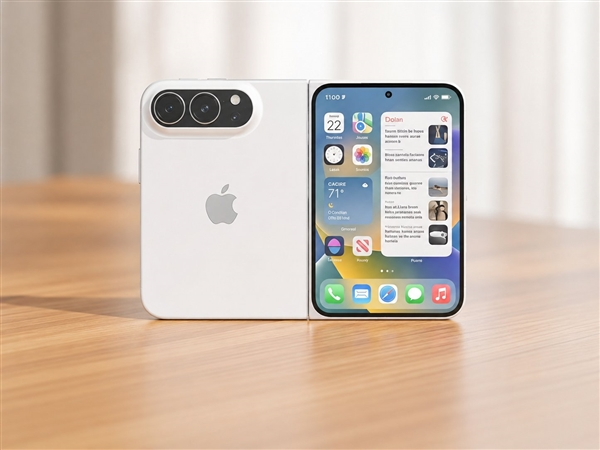
Multiple sources indicate that Apple will officially release its first foldable iPhone, tentatively named iPhone Ultra, between September 8th and 10th. This timeline is now considered relatively certain, and supply chain sources also report that small-batch shipments of the device are underway and mass production preparations are progressing.
However, there are also uncertainties, such as the sales date. Some sources say that the iPhone Ultra has a complex structure and a slow yield rate, so it may not be available until October or even November. It’s a case of spending a lot of money and still needing patience.
Regardless, Apple’s launch of a foldable phone is a done deal. For consumers, the key question is whether it’s worth waiting for and whether they should upgrade. Below, I’ve compiled some of the more reliable leaks from the past few days to help you make a decision in advance.
1. Do not follow the example of others in the industry.
Apple has rarely imitated its competitors in naming in recent years. Industry speculation suggests that Apple also doesn’t intend to follow the Android camp and call it “Fold,” but rather use “Ultra” to place this foldable device at the top of its product line. Bloomberg and some domestic digital bloggers have mentioned this name, so it’s unlikely to be wrong.
2. Thinner than the iPhone Air
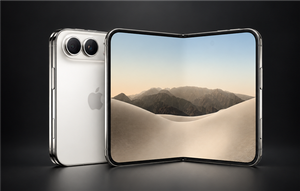
Based on the black mock-up leaked at the end of June, the iPhone Ultra uses a liquid metal frame, reducing its thickness to between 4.5 and 4.8 mm when unfolded, making it nearly 20% thinner than the already thinner iPhone Air. When folded, the thickness returns to 9-9.5 mm, not much different from the iPhone 17 Pro’s 8.75 mm, making it easy to carry in a pocket without much burden.
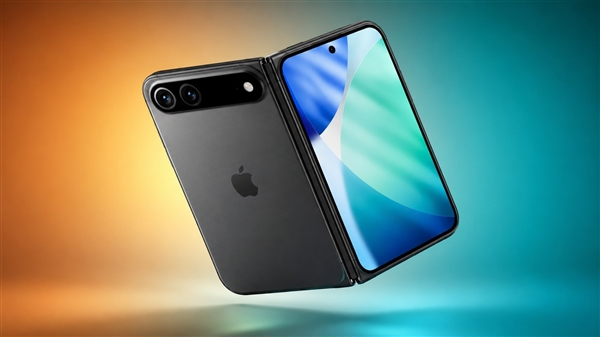
The back of the device features a capsule-shaped dual-camera module, with the volume buttons on the top edge, the power button on the side, and a separate camera control button below. These are all common designs. If there’s anything to look forward to, it’s the build quality. After all, Apple really knows how to refine the feel of a device.
3. When closed, it’s a mobile phone; when opened, it’s half an iPad mini.
The external screen is estimated to be between 5.3 and 5.5 inches, with a punch-hole design, so it’s no different from a regular iPhone when used normally. The internal screen, when unfolded, is likely to reach 7.6 to 7.8 inches, with a rumored resolution of around 2713 x 1920, supporting a 120Hz ProMotion adaptive refresh rate, and using a flexible OLED panel from Samsung.
This internal screen size has already encroached on the iPad mini’s territory. In Apple’s own product line, the largest screen currently is only 6.9 inches, which is the size of the iPhone 17 Pro Max. Once the iPhone Ultra is launched, it will be the first time that Apple’s mobile phone family has reached a screen size of 7 inches or larger.
4. The crease problem may have truly been solved.
Compared to traditional candybar phones, creases have always been an unavoidable pain point for foldable screen phones, and even Apple faces this problem. However, according to multiple sources, Apple seems to have truly solved this issue.
Why are foldable screens prone to creases? Imagine repeatedly folding a piece of paper; the folded area will become softer and more noticeably concave. The same principle applies to the flexible material of a screen. With repeated folding, the crease in the middle will become visible to the naked eye due to material fatigue.
Apple’s approach involves laser-drilling numerous tiny holes in the screen’s support plate to distribute the stress generated during folding. This, combined with a liquid metal hinge and a special high-grade adhesive, ensures more even stress distribution during bending, preventing stress concentration along a single line. While the principle is easy to understand, truly achieving a “crease-free” result depends on its performance over extended use—that’s the biggest challenge.
5. Subtracting elements from the image
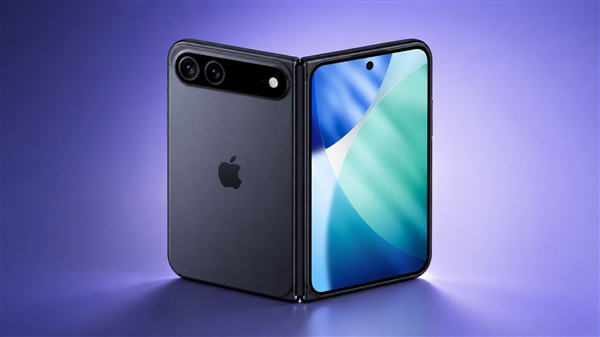
Based on the images, the leaked information currently points to a dual-camera setup: a 48MP main camera and a 48MP ultra-wide-angle camera, but no telephoto lens. This means that those who choose the Ultra model will have to forgo higher magnification optical zoom, which seems somewhat unexpected given the “Ultra” name.
However, it is understandable that the folding structure itself has to accommodate dual screens, hinges and batteries, leaving very little space for the camera module. The telephoto lens requires a thicker lens group and occupies more depth in the body, which directly conflicts with the goal of “ultra-thin”.
There will be two front-facing cameras, one for the inner screen and one for the outer screen, making it convenient for taking selfies or making video calls. Whether it will use the 18-megapixel centered portrait lens from the iPhone 17 series is currently unknown.
6. Chips and batteries
The processor is the A20 Pro, manufactured using TSMC’s 2nm process. The smaller the process number, the more refined the transistors inside the chip, allowing more transistors to be packed into the same area. In layman’s terms, this means “stronger performance and lower power consumption,” representing a significant leap in manufacturing technology compared to the previously common 3nm process.
It also uses WMCM wafer-level multi-chip module technology to more tightly package multiple chips such as processor and memory together, reducing the distance and loss of data transmission. The memory is maintained at 12GB, but it has been replaced with faster LPDDR5, which will significantly improve overall performance and power consumption.
In terms of communication, it is said that it may use its own second-generation C2 modem. At the same time, there are reports that the foldable phone will completely eliminate the physical SIM card slot and switch to eSIM. With the iPhone Air as a precedent, coupled with the pursuit of a thin and light body for foldable screens, this is not unexpected.
In addition, this battery will also use a brand-new high-density silicon anode battery technology, which has a higher energy density in the same volume, ensuring that Apple can fit a 5800mAh battery without increasing the thickness of the body, which is almost 30% more than the current iPhone Pro Max.
7. Face ID is gone, but fingerprint recognition is back.
The iPhone Ultra will not have Face ID; instead, it will have Touch ID integrated into the power button. The reason is most likely due to thickness limitations. The “TrueDepth” sensor module required for Face ID is actually a combination of several components, including an infrared camera and a dot projector, which already takes up a lot of thickness and space in the device. It is difficult to fit it into an extremely thin and light body, especially since this device has two screens. If both sides need to support full Face ID, the structural complexity will double.
8. iOS 27 quietly laid a trap.
iOS 27 was unveiled at WWDC 2026, but according to Gurman, the features truly designed for foldable screens won’t be available until the fall. The core features are twofold: support for side-by-side app display when unfolded, and some apps will adopt a sidebar layout similar to the iPad. It’s important to note that it’s still an iPhone, just with an operation logic that’s closer to the iPad when unfolded.
9. Highly likely to be the most expensive iPhone in history.
The current rumored price is $1999 for the 256GB version, with the top-of-the-line 1TB version potentially exceeding $2399. The foldable screen, dual-hinge structure, dual screens, titanium or liquid metal body, combined with the latest chip technology, significantly increase the cost. If Apple does name it “Ultra” instead of “Fold,” it’s already hinting that this isn’t an extension of the Pro Max, but rather a separate ultra-high-end product line.
The information above is currently based on supply chain leaks and mock-up leaks; Apple has not officially confirmed any details, and the specific release date and final pricing are still uncertain. If you’re interested in purchasing one, it might be best to wait for the September launch event and make a final decision after receiving official information.

Kazam is Focused on creating and reporting timely content in technology with a special focus on mobile phone technology. Kazam reports, analyzes, and reviews recent trends, news and rumors in mobile phone technology and provides the best possible insights to enhance your experience and knowledge.