Exynos 2600 GPU Sets New Benchmark Ahead of Samsung Galaxy S26
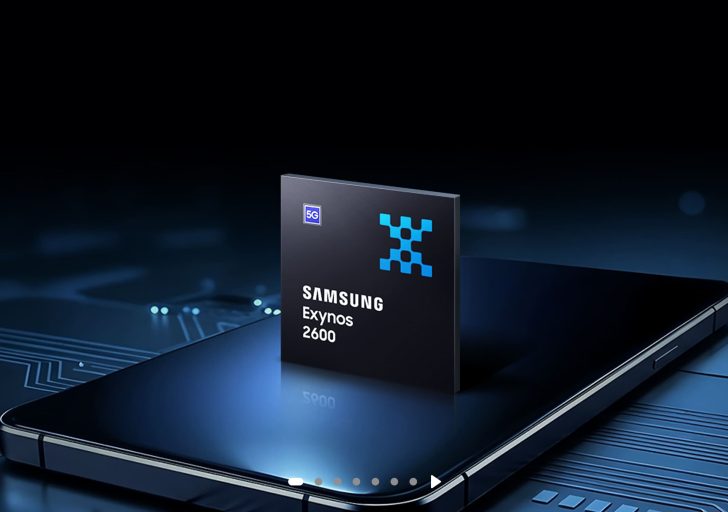
In December 2025 Samsung unveiled its latest flagship chipset for mobile devices the Exynos 2600 marking a major step forward in the company’s semiconductor technology. This advanced processor is expected to power the upcoming Galaxy S26 series, Samsung’s next lineup of non foldable flagship smartphones. Early performance tests suggest that the Exynos 2600 is highly capable frequently going head to head with its main rival, Qualcomm’s Snapdragon 8 Elite Gen 5 and in some areas even surpassing the current market leader.
In some parts of the world, Samsung may choose to equip the Galaxy S26 with the Snapdragon 8 Elite Gen 5 rather than the Exynos 2600. However a fresh performance report sheds more light on the capabilities of the two chipsets. The report reveals that the Exynos 2600’s GPU, the Xclipse 960 delivers superior performance over the Snapdragon 8 Elite Gen 5’s Adreno 840 specifically in ray tracing a critical aspect of modern graphics processing. This suggest that Samsung’s custom GPU design offer a notable advantage in advanced graphics rendering tasks.
Exynos 2600 Outperforms Snapdragon 8 Elite Gen 5 and Dimensity 9500 in Ray Tracing
The Exynos 2600’s Xclipse 960 GPU posted a score of 8,321 points in the Mobile Raytracing test of GPU Score In Vitro 1.0, a benchmark that focuses on assessing ray tracing efficiency and rendering strength. In practical terms, this means it currently stands as the world’s most capable and highest performing GPU for mobile devices in ray tracing performance.
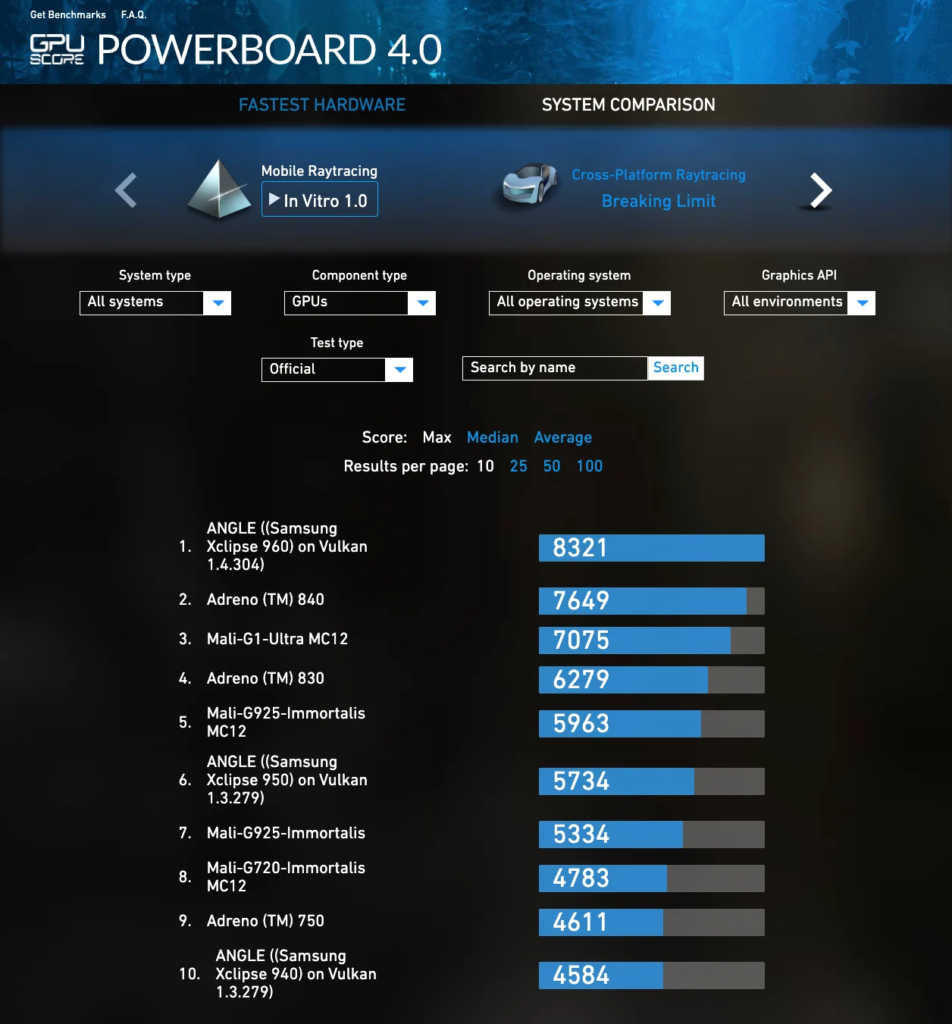
Looking at competing chips, the Snapdragon 8 Elite Gen 5’s Adreno 840 recorded 7,649 points in the same test whereas the MediaTek Dimensity 9500’s Arm Mali-G1 Ultra MC12 GPU scored 7,075 points. Based on these figures, Samsung’s chipset delivers an 8.8% performance advantage over Qualcomm’s offering and a 17.6% lead over MediaTek’s solution.
The Exynos 2600’s Xclipse 960 GPU holds the distinction of being the first mobile GPU in the world to incorporate AMD’s RDNA 4 architecture. According to recent benchmark tests, RDNA 4 delivers impressive performance suggesting that Samsung’s decision to co-develop a custom GPU with AMD was a smart move, especially compared to the alternative of adopting ARM’s Mali-G1 Ultra MC12 GPU for its flagship chipset.