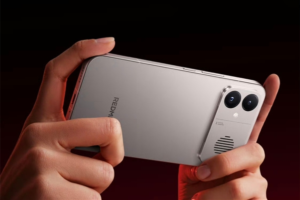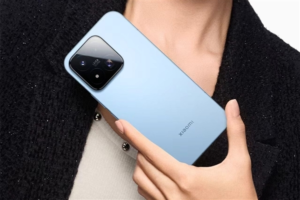
A summary of leaked information about the Xiaomi MIX Fold 5.

To be honest, the current smartphone market is getting a bit tiresome – innovation in candybar phones is basically incremental.
People’s expectations for foldable screens have long since changed from “joining the fun and trying it out” to “whether it can be used well and whether the battery life is good.” At this critical juncture, the Xiaomi MIX Fold series, which has been silent for almost two years, is finally going to be updated to its fifth generation, namely the rumored MIX Fold 5.
To be honest, Xiaomi has high hopes for this device. It’s not just a simple iteration; it’s more like a “do-or-die” move by Xiaomi in the high-end market—emphasizing “full-stack self-developed technology.” Anyone with a discerning eye can see that it’s aimed at Apple’s foldable screen, which they haven’t entered yet but has been rumored for a long time.
According to several reliable industry insiders, the MIX Fold 5 will most likely be released in July or August 2026, just before Apple may test the waters of foldable screens. This timing difference is strategically significant.

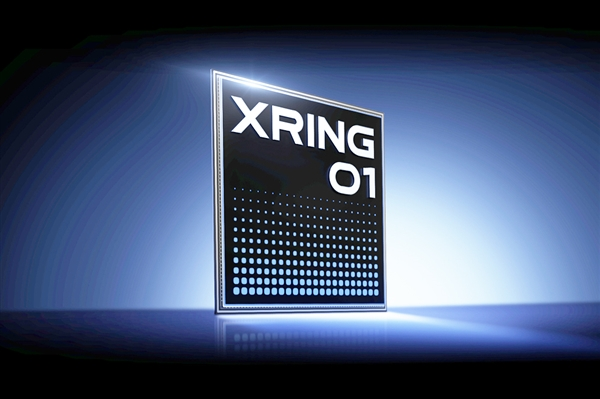
What truly impresses people is its core hardware – Xiaomi has really gone all out in terms of self-developed full-stack technology. The MIX Fold 5 is expected to be the world’s first to launch Xiaomi’s self-developed “Xuanjie O3” chip.
Interestingly, this chip skipped the previously rumored O2 version and went straight to compete with the Snapdragon 8E series. It uses TSMC’s 3nm process, which shows that Xiaomi wants to establish a firm foothold in terms of performance.
However, the most radical aspect is not the manufacturing process, but its architecture design—instead of using the common combination of large cores and small cores, it adopted a three-cluster solution of “Prime Core + Titanium Core + Little Core”, with the main frequency of the super core reaching 4.05GHz.
To be honest, these specs do look impressive, but more importantly, they are specifically optimized to address the pain points of foldable screens—such as smooth multitasking, no frame drops when switching between inner and outer screens, and the most troublesome battery life issue, which has reportedly been deeply tuned. Hopefully, this time it can completely break free from the curse of “foldable screens having strong performance but poor battery life”.
Not only chips, but also key components such as screens and hinges are self-developed by Xiaomi, which is indeed surprising. The inner screen is an 8.03-inch 2K+ OLED LTPO panel. The official statement is that through new materials and processes, the crease is 40% shallower than the previous generation, approaching “crease-free”.
I personally have reservations about this statement. After all, creases are a common problem with foldable screens, and if they can be made almost invisible to the naked eye, that’s already good enough.
The external screen is a 6.56-inch 1.5K flat screen that supports 2160Hz high-frequency PWM dimming. This is something to be praised. When using the external screen daily, it is eye-friendly and comfortable, and the grip is much more comfortable than the previous generation. There is no longer that cramped feeling of “the external screen of the folding phone is too narrow and not easy to use” – thanks to Xiaomi’s self-developed hinge, plus the “wide folding” design, the external screen ratio is closer to that of a regular candybar phone, and finally we don’t have to compromise the awkward ratio of folding screens anymore.
Another pleasant surprise is that the body thickness is kept to around 8mm, while still packing in a large 6000mAh battery. It’s worth noting that foldable screens are usually thick and heavy due to their structure, and their battery life is often poor. Xiaomi’s achievement of this thickness and large battery demonstrates considerable effort, and battery life should be a major highlight.
On the software side, the MIX Fold 5 is not lacking either. It will be equipped with a system specifically customized for foldable screens, and will also deeply integrate Xiaomi’s self-developed Vela OS and MiMo V2.5-Pro large model.
This large model has trillions of parameters, ranking first among open-source large models. In actual use, features such as intelligent split-screen, cross-application drag-and-drop file transfer, and AI-powered automatic note organization are quite practical, not just flashy gimmicks.
Honestly, this time Xiaomi has integrated “chip + system + big model” together, which is the first time that these three core technologies have been closed in a single product. This is a very steady step and points out a direction for future AI terminals – not just stacking hardware, but deep integration of software and hardware.
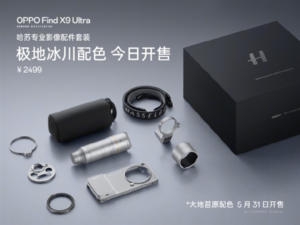
Another interesting leak suggests that the MIX Fold 5 might experiment with modular imaging, testing a magnetic external lens solution. I think this idea is quite clever. Foldable screens have limited space, making it difficult to cram in large sensors. Using an external lens avoids making the phone bulky while still meeting the needs of professional photographers. It’s a clever way to differentiate itself from competitors, much more innovative than simply piling on specifications.
In summary, the Xiaomi MIX Fold 5 is definitely not just a simple “feature-packed flagship,” but rather a systematic assault by Xiaomi in the high-end foldable screen market. Before Apple enters the fray, Xiaomi has crammed all its self-developed technologies into this device, aiming to seize the technological high ground.
If the actual user experience is as good as the leaks suggest, without any obvious shortcomings, it will likely disrupt the current foldable screen market and give Chinese brands more say in the global high-end smartphone market. As for its final performance, we’ll have to wait until it’s released and we can actually use it to find out; after all, no matter how enticing the leaks are, nothing beats the real thing.

Kazam is Focused on creating and reporting timely content in technology with a special focus on mobile phone technology. Kazam reports, analyzes, and reviews recent trends, news and rumors in mobile phone technology and provides the best possible insights to enhance your experience and knowledge.