Cook’s final WWDC: AI Siri debuts, but Chinese users still can’t use it yet.
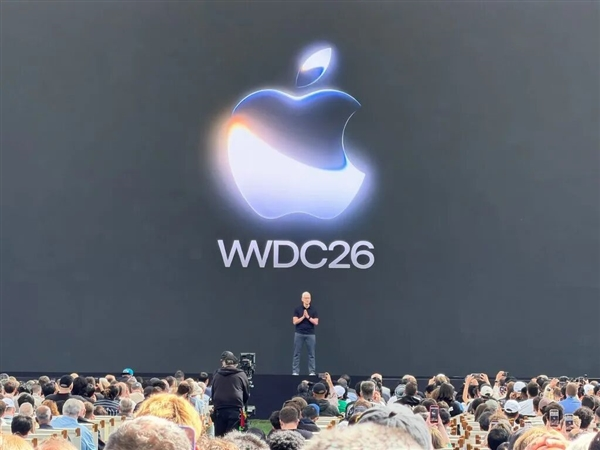
Early this morning Beijing time, the WWDC 2026 keynote concluded. Apple upgraded all its systems to “27,” but there was only one true protagonist: the brand-new Siri, promised for two years and repeatedly delayed, finally arrived—at the cost of Apple handing over its “brain” to Google.
This is also Tim Cook’s last WWDC as CEO (John Ternus, the former head of hardware engineering, will take over). Making up for his lack of AI knowledge is almost his last and most important achievement during his tenure.
Besides AI, another theme of this presentation was performance—but we’ll talk about that last. Let’s look at the real highlight first.
01 The all-new Siri is here, but its brain comes from Google.
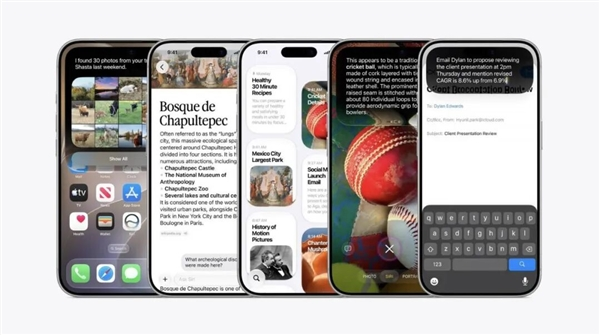
Siri, promised in 2024 but never arriving, has finally become a reality: a standalone app that understands “personal context” (remembers your schedule, contacts, and photo content), can sense what’s happening on the screen, and can perform actions for you across different apps—no longer just throwing you a web link and wishing you good luck as it used to.
In the live demonstration, Siri checked the 2026 World Cup schedule and was then asked to plan a party around a certain match and recommend a few dishes from the countries of the two teams.
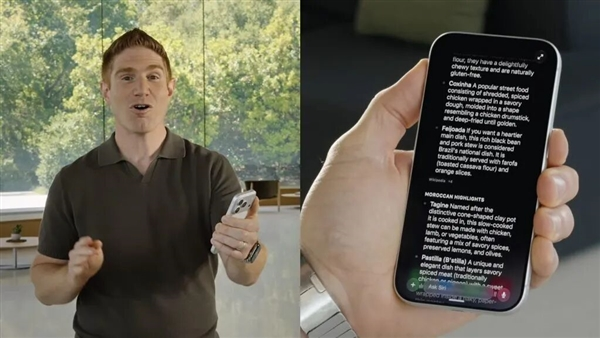
On a Mac, you can Ctrl-click on images, text, or videos to activate it, or select three presentations to have it compare and offer suggestions. Conversations within the Siri app sync across devices, seamlessly connecting your phone, iPad, Mac, Vision Pro, and even your watch.
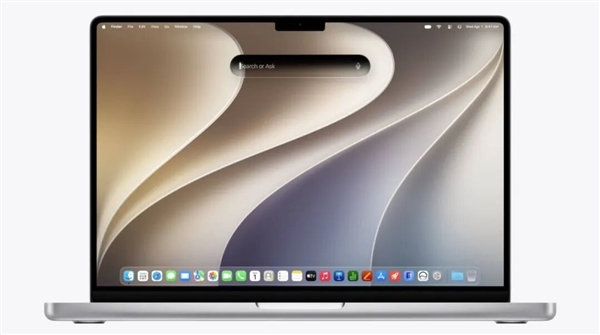
Apple also added a “Search or Ask” swipe gesture: run shortcuts, search your phone’s content, or directly hand over a complex question to third parties like ChatGPT, Claude, or Gemini.
This capability is almost a verbatim replica of the promise Apple made to Siri two years ago, which it has yet to deliver on. This two-year gap has become a laughing stock in the industry, and Apple has even been embroiled in a legal dispute over the marketing of Apple Intelligence for prematurely promoting features that never materialized.
Apple Intelligence, which supports it, has also been upgraded: a second-generation on-device model, enhanced dictation, improved search and perception through Spotlight semantic indexing, and enhanced world knowledge and screen awareness. Apple’s approach to catching up is to outsource some of its AI to Google.
This long-standing collaboration was officially announced earlier this year—Apple’s “Foundation Models” will be built on Google’s Gemini model and cloud services. According to Bloomberg reporter Mark Gurman and others, this is a custom Gemini with approximately 1.2 trillion parameters, for which Apple will pay about $1 billion annually. This is far more expensive than Apple’s self-developed cloud models, and it ends the long-standing debate about whether Apple would develop its own, acquire, or collaborate with Google.
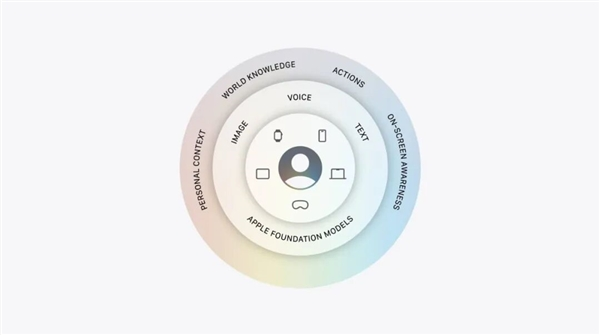
But Apple has repeatedly emphasized one thing: it’s borrowing Google’s model, not handing over your data to Google. Officially, the entire system still runs locally on the device and on its own private cloud computing platform—simple tasks are completed on the device, and only complex tasks are sent to the cloud, which runs in a private cloud that can be independently verified by security researchers. In other words, Apple wants Gemini’s capabilities but doesn’t want to relinquish its consistently touted privacy standards. Whether this “wanting both” approach will hold up remains to be seen once it’s actually used.
02 Cook’s Last Lesson: A Belated AI Restructuring
To understand today’s presentation, we need to look back at the upheaval that occurred within Apple over the past year.
According to multiple media reports, Cook himself admitted that Apple Intelligence 1.0 was a failure even worse than the Apple Maps incident—the company was once ridiculed as “AIMLess” (wandering aimlessly in AI/ML). After a secret executive meeting in early 2025, he personally became deeply involved.
The results of the restructuring are all on stage today: Vision Pro’s creator, Mike Rockwell, takes over Siri; software chief Craig Federighi leads the AI strategy; former Google and Microsoft engineering executive Amar Subramanya joins to lead model research; and former AI head John Giannandrea left this year. This press conference, in essence, is Cook addressing his biggest weakness before handing over the reins.
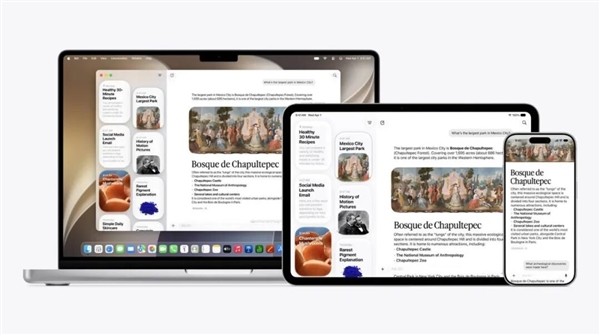
For those who frequently take photos and then slowly edit them at home, this section on photos is worth reading separately.
Apple has equipped Photos with a new set of AI models: Clean Up can remove clutter in more complex scenes; the new Extend can “draw” edges that were not originally there; and Reframe lets you use gestures to change the perspective of a photo and zoom out—choose the angle and press save.
The moment you press save, the photo is sent to the cloud for processing (Apple says this step is also done on its private cloud). These editing capabilities are now driven by a combination of on-device and cloud models, rather than the “all on your device” approach that Apple has repeatedly emphasized in the past. The feature will be available later this year on iPhone, Mac, and Vision Pro.
The camera itself is also more flexible: you can customize the order of camera controls, which are divided into three categories: basic, manual, and settings. Advanced options also unlock more professional controls such as depth of field and exposure. For those who want to use the iPhone as their primary phone, this is a small but practical change.
03 However, this AI system is not yet available to users in mainland China.
The most important thing for Chinese users to note today is a sentence Federighi specifically added when introducing Apple Intelligence: ” Depending on local regulatory approvals, this feature will not be available in China at this time.”
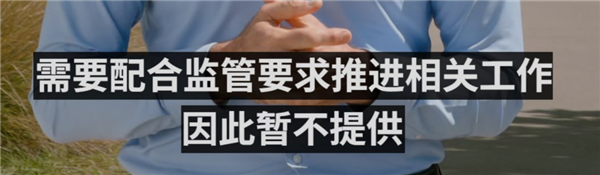
In other words, the main attraction of this launch event—the new Siri based on the Gemini—is absent from mainland China, at least for now.
This is not hard to understand. Gemini and the Google services behind it are not available in China; and China has a strict filing and approval system for generative AI, requiring content filtering, data localization, and regulatory approval before launch. A solution based on Google’s model cannot be simply transplanted here.
What will the Chinese version be like? Based on last year’s path, we can roughly guess its outline.
Last year, the Chinese version of Apple Intelligence planned to provide a fully localized solution: Apple’s self-developed model still runs on the device side, but Alibaba provides a layer of content filtering and compliance middleware that is imperceptible to users. Baidu, as a participant, is responsible for search, visual intelligence and other capabilities, while cloud processing is handled by Guizhou Cloud Big Data, which is already operating the Chinese version of iCloud, and it is only available on Chinese devices.
It’s almost certain that the “brain” of the Chinese version of the new Siri will not be Gemini, but will be replaced by a large domestic model—Alibaba’s Tongyi Qianwen is currently the most likely candidate.
But this time it’s much more difficult. The new Siri is much more radical than last year’s: it will read your screen, access your personal data, and perform tasks for you across apps. This ability to “see and act” is precisely the most sensitive area for regulation, and the filing and approval process will only be slower and more complicated.
Last year, Apple Intelligence was released in China more than half a year later than the global version. This time, it will likely be even later—Chinese users who want to use a “China-exclusive” new Siri may have to wait until 2027, or even longer. During this gap, Huawei and Xiaomi are aggressively attacking the high-end market with their respective large-scale models. This time lag is a real risk for Apple’s business in China.
After discussing AI, you can fast forward to the rest.
If you only look at the numbers, iOS 27 looks like a “repair launch event”.
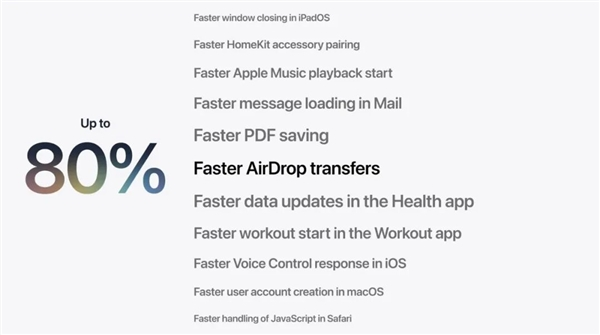
According to Apple, apps launch up to 30% faster, AirDrop is 80% faster, new photos load 70% faster, iPadOS file browsing is 5 times faster, Wi-Fi and cellular switching is also quicker, and a low-level CPU scheduler optimization makes older iPhones more responsive.
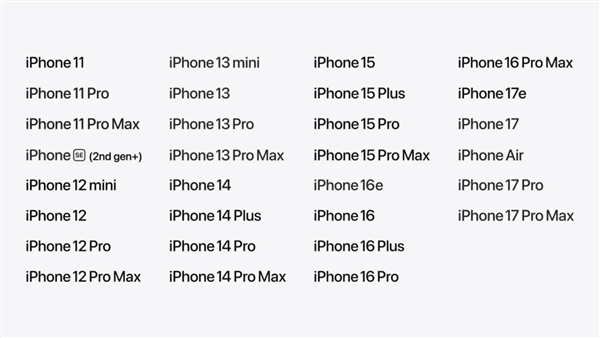
The entire slide was filled with percentages, but almost none of them mentioned new features. Compatibility was identical to iOS 26 (down to the iPhone 11 and the second-generation SE), with no older devices being phased out. According to Bloomberg, this “subtraction” approach is paving the way for this year’s foldable iPhone.
In terms of design, the controversial Liquid Glass now features a transparency slider and sharper icons. There are also some minor new features: iCloud Photo Album is now available for Android and Windows and supports full resolution; the Health app adds perimenopausal tracking and information; FaceTime dual cameras are now available; the phone number can be used on two devices simultaneously; Shortcuts support natural language; and parental controls have been strengthened, with the new Apple Child Account allowing for more granular restrictions on which apps children can use.
The other platforms largely follow the same theme. macOS adopts the new codename Golden Gate (replacing Tahoe), adding a transparency slider to Liquid Glass and standardizing window rounded corners; it’s also reported that it will only support Apple Silicon, completely abandoning Intel Macs (subject to Apple’s official compatibility list). iPadOS 27 continues to “make the iPad more like a computer”: a persistent menu bar, resizable iPhone app windows, and undo/redo support for home screen editing. VisionOS 27 can transform panoramic photos into spatial scenes and immersive environments; the developer beta is available today and will be released this fall—however, Vision Pro sales have remained lukewarm for over two years, making these updates seem more like ongoing investment than a one-off turnaround. watchOS 27 is another round of refinements to battery, step counting, Wi-Fi, and water detection, plus a visitor key and new watch faces.
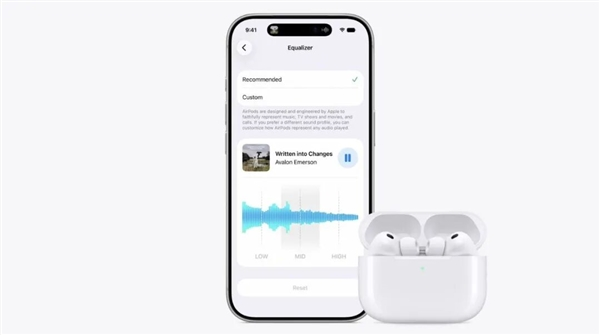
The new system will be officially rolled out this fall with the next generation of devices, and developer beta versions are being released starting today. The full version of Siri, which has been two years in the making, won’t be available to users until later this year—and if you’re in mainland China, that “later” might be even further down the line.
For Tim Cook, this press conference had another layer of meaning.
Fifteen years ago, he took over a company from Jobs that “lived by magic”—creating something that amazed the world every year. Fifteen years later, at his last WWDC as CEO, there was no “One more thing” on stage, no new hardware, only an iPhone that was 30% faster, and a “brain” borrowed from a competitor.
This doesn’t sound like the kind of farewell a legend should have. But perhaps this is precisely Cook’s dignity: he was never the one performing magic under the spotlight, but the one who kept the lights on and led the company to a market value of over three trillion dollars. Until the very end, he did the same thing—fix the ugliest flaw, clean the house, and then hand the keys to John Ternus.
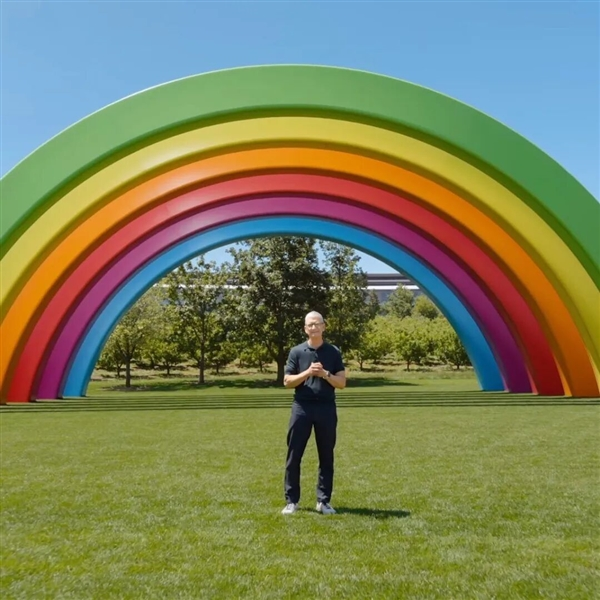
Before the press conference began, he posted a lighthearted “Good morning” video on social media, featuring a group of celebrities alongside him. There was no sentimentality, nor any farewell.

Kazam is Focused on creating and reporting timely content in technology with a special focus on mobile phone technology. Kazam reports, analyzes, and reviews recent trends, news and rumors in mobile phone technology and provides the best possible insights to enhance your experience and knowledge.