Kirin 9050 Pro with Logical Folding! In-depth Analysis of Huawei Mate 90 Series Leaks
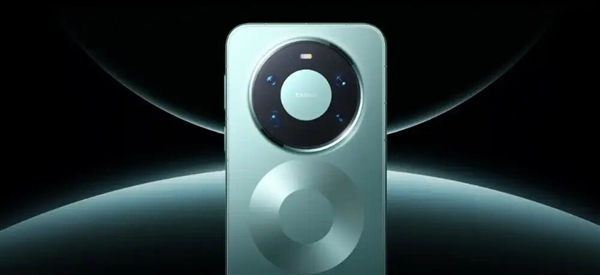
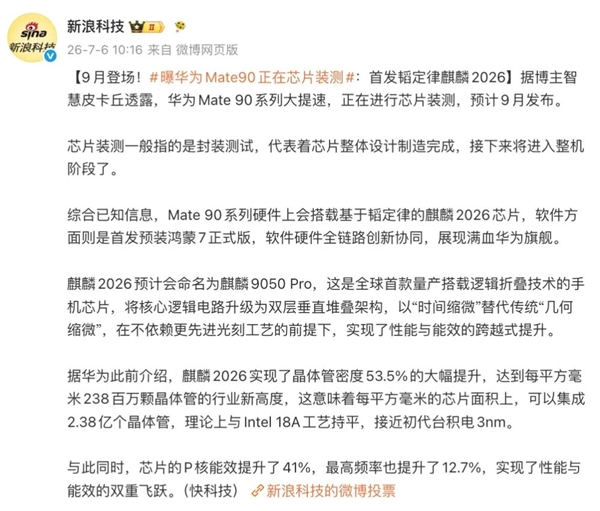
This year’s Kirin chips may truly represent a qualitative leap. The “Tao Law” that Huawei showcased at ISCAS 2026 is now rumored to be implemented in the Mate 90—the Kirin 9050 Pro, the world’s first logic-folding chip.
This is no longer simply about shrinking transistor size. The traditional approach is “geometric miniaturization,” where each generation of process technology makes transistors smaller, but after 7nm, the gains become thinner while the costs become higher.
Huawei’s approach? They stacked logic circuits like folded blankets—two layers vertically stacked, trading time for space. The results were astonishing: transistor density reached 238 million per square millimeter, jumping from approximately 120 million in the Kirin 9000S to nearly the level of Intel 18A, comparable to the first-generation TSMC 3nm process.

Blogger @SmartPikachu revealed that this generation of Kirin chips is “speeding up even faster than expected, and is already in the chip assembly and testing phase, giving it a chance to beat competitors.” Assembly and testing means the chip design is complete and ready for device production. Huawei is indeed stepping on the gas pedal aggressively.
1. Logical Folding: How Does Time Twist Work?
Logic folding isn’t a new concept, but mass production of it is a first. Simply put: traditional chips have transistors laid flat on a silicon wafer, like parking spaces; logic folding stacks two layers of logic circuits vertically, connecting them with vertical interconnects. It’s like converting a single-story parking lot into a three-dimensional garage, cramming in more transistors into the same footprint. The trade-off is increased heat dissipation and process complexity—the two stacked layers generate combined heat, and wiring and signal delays are more difficult to control. How did Huawei solve this? Leaks suggest they used “time miniaturization” technology, optimizing timing and low-power design to allow the two layers of circuits to work together, increasing latency by less than 10% while increasing density by 53.5%.
Is this density slightly higher than Intel’s 18A? Actually, they’re close, but Intel’s 18A uses a planar process, while Huawei uses a stacked process, which is theoretically more difficult. TSMC’s initial 3nm density was about 290 million chips per square millimeter, not far off from the Kirin 9050 Pro’s 238 million chips. The key is that Huawei doesn’t have EUV lithography machines, yet it managed to catch up with advanced processes through stacking and system-level optimization. This is indeed unexpected.
2. Hardware suite: Upgraded battery, screen, and imaging capabilities.
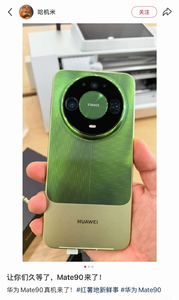
Besides the chip, the Mate 90 series boasts a packed array of peripherals. A blogger revealed that the “super-sized” version features an upgraded front camera, a 7K large battery (7000mAh? That’s almost the size of a small power bank!), a main camera with a 50MP variable aperture, and a 200MP self-developed main camera—200MP, one of which is equivalent to two of others. However, whether the 200MP main camera will be mass-produced remains uncertain, as the practicality of high-pixel counts on mobile phones is controversial. The Tandem dual-layer OLED screen will continue to be used, and it will be the first to commercially utilize next-generation OLED technology, offering breakthroughs in display lifespan, power consumption, brightness, and color gamut. Two-way BeiDou satellite messaging and satellite calling will definitely be retained, as this is already a standard feature of Huawei flagships.
3 Foldable Screen Matrix: Tri-fold, Wide-fold, Large-fold – All-rounder
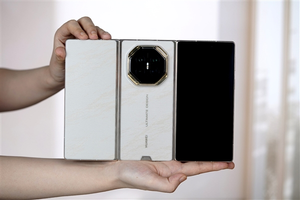
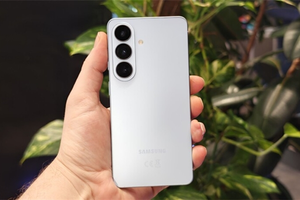
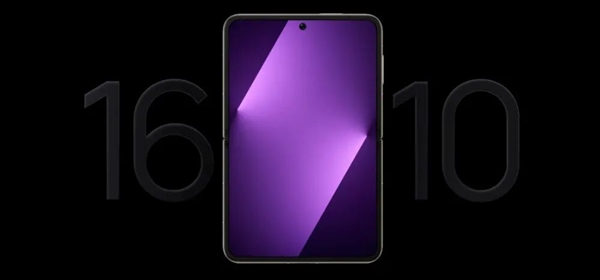
Huawei’s ambitions in foldable screens are even greater. A tech news site revealed Huawei’s strategy: a wide foldable to compete with competitors’ large foldables (e.g., using the Pura X’s 16:10 wide screen to rival the Samsung Z Fold), a tri-fold to compete with competitors’ wide foldables (using the Mate XT’s tri-fold structure to compete with the Xiaomi MIX Fold 4’s wide screen), and finally, a large foldable to finish the job. Next year, there will also be a “small wide foldable with absolutely no competitors”—speculated to be an iteration of the Pura X.

What is the Pura X? Released last March, it features a 6.3-inch 16:10 internal screen, a 3.5-inch external screen, a 50MP main camera, a 40MP ultra-wide-angle lens, an 8MP telephoto lens, and a 1.5MP multispectral red-maple color camera, along with a 4720mAh battery and 66W wired/40W wireless connectivity. Its selling point is its wide screen—wider than conventional foldable screens, resembling a small tablet. However, its sales weren’t particularly impressive, mainly due to its unique form factor. If Huawei could release a more compact version, reducing the screen size to under 6 inches and increasing the external screen size, combined with a logical folding chip and HarmonyOS, it might truly become a “unrivaled” handheld gaming device.
Our judgment
According to leaks, Huawei will release the Mate 90 series and the tri-fold screen Mate XT this September, followed by the Mate X8 later. The chip, screen, battery, and imaging systems are all top-of-the-line, with the logical folding design representing a new milestone in the technology landscape. The questions remain: Can the heat dissipation and yield rate of the double-layer stacking technology support mass production? Will the 200-megapixel main camera actually be used? How much practical improvement in user experience will the collaboration between HarmonyOS 7 and the Kirin 9050 Pro bring?
But at least Huawei’s roadmap is clear—it doesn’t rely on advanced lithography, but rather on architectural and system innovation to compete. The Mate 90 this fall will be the first mass-produced product of this approach. We’ll see how far its performance can go then.
As for that “small, wide folding screen with no competitors,” we speculate that it might be a smaller, thicker version of the Pura X, or simply a new hybrid of vertical folding and wide folding. It’s still a long way off, coming next year, but Huawei’s foldable screen strategy has already begun to forge ahead on paths others haven’t taken.

Kazam is Focused on creating and reporting timely content in technology with a special focus on mobile phone technology. Kazam reports, analyzes, and reviews recent trends, news and rumors in mobile phone technology and provides the best possible insights to enhance your experience and knowledge.