Huawei’s most aggressive chip! Kirin 2026 is here: significantly improved performance.
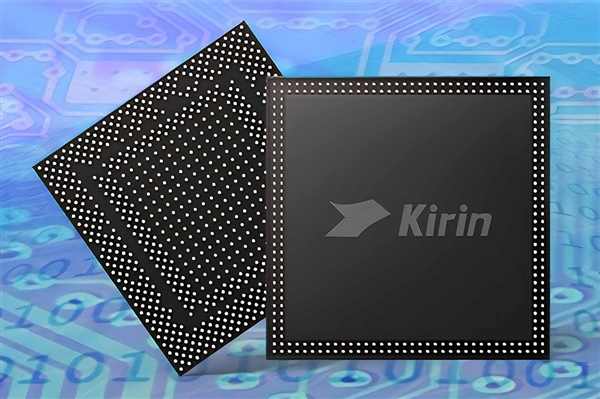
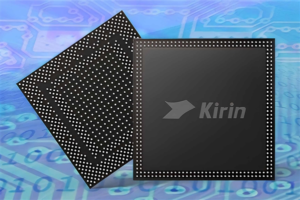
At the International Symposium on Circuits and Systems (ISCAS2026) held in Shanghai, He Tingbo, Director of Huawei and President of its Semiconductor Business Unit, officially announced that the world’s first mass-produced mobile phone chip equipped with logic folding technology, the “Kirin 2026”, will be officially launched in the fall of 2026.
This milestone breakthrough not only marks the strong return of Huawei’s mobile phone chips, but also opens up new development space for the global semiconductor industry with its disruptive technological path. As a core highlight of this release, the Kirin 2026 represents the first successful implementation of Huawei’s logic folding technology.
Unlike the planar single-layer layout of traditional chips, this technology upgrades the core logic circuit to a two-layer vertical stacked architecture, replacing the traditional “geometric miniaturization” with “time miniaturization”, achieving a leapfrog improvement in performance and energy efficiency without relying on more advanced photolithography processes.
In terms of technical performance, the Kirin 2026 achieves a significant increase in transistor density by 53.5%, reaching a new industry high of 238 million transistors per square millimeter. The core clock speed is increased to 3.1GHz, and the P-core energy efficiency is improved by 41%.
Its core advantage lies in the fact that vertical integration significantly shortens the signal transmission distance inside the chip, significantly reduces the resistance and capacitance load of signal propagation, compresses signal delay from the bottom layer, and achieves a qualitative change in circuit performance.
At the seminar, Huawei also released a new principle guiding the development of the semiconductor industry – the “Tao (τ) Law”. This is the first time that a Chinese company has proposed a new theory for industrial development in the global semiconductor field.
This law, with the core principle of systematically reducing the time constant τ, breaks Moore’s Law’s dependence on advanced manufacturing processes through full-stack collaborative optimization from devices, circuits, and chips to the system.
He Tingbo revealed that, based on the Tao Law, Huawei has successfully designed and mass-produced 381 chips in the past six years. In the next ten years, Huawei will continue to promote the evolution of logic folding technology to multiple levels. It is expected that by 2031, the transistor density of high-end chips based on this technology will reach the same level as the 1.4-nanometer process.
For a long time, the global semiconductor industry has been addicted to process upgrades. As transistor size approaches physical limits, the pace of Moore’s Law evolution continues to slow down.
Huawei’s logic folding technology and Tao’s Law provide the global semiconductor industry with a new development path that does not rely on advanced lithography equipment, and provide a core direction for independent breakthroughs for China’s semiconductor industry, which is constrained by external technology blockades.
For consumers, the arrival of Kirin 2026 means that Huawei’s terminal products will usher in a comprehensive upgrade in performance and experience. Stronger computing power and lower power consumption will bring users a smoother user experience and stronger AI computing power support.

Editor’s Review:
From “pursuing process technology” to “creating rules,” the release of Huawei’s Kirin 2026 has long exceeded the significance of a mobile phone chip. It is not only a hardcore breakthrough for China’s semiconductor industry in adhering to independent innovation under external technological blockade, but also provides the global semiconductor industry with a Chinese solution to break through the “Moore’s Law bottleneck” with “Tao’s Law” and logic folding technology.
When the industry is generally caught in “process competition”, Huawei has used a decade of technological accumulation to prove that the core value of independent innovation lies not in following, but in opening up a new track. This breakthrough is not only a further expansion of Huawei’s semiconductor technology landscape, but also marks that Chinese technology companies are steadily moving from “followers” of technology to “definers” of industry rules.


Kazam is Focused on creating and reporting timely content in technology with a special focus on mobile phone technology. Kazam reports, analyzes, and reviews recent trends, news and rumors in mobile phone technology and provides the best possible insights to enhance your experience and knowledge.