A new species in single-product technology! The vivo X300 Ultra has become a hit
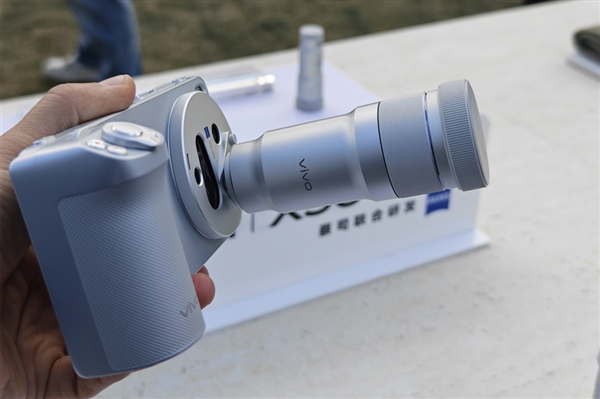
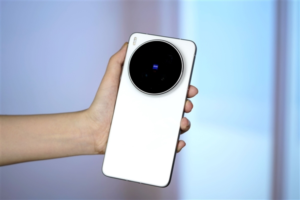
vivo held its Spring New Product Launch Conference for the X Series in Lijiang, officially releasing the professional-grade vivo X300 Ultra and the compact vivo X300s. The former is built entirely according to the logic of a camera, featuring a Zeiss master lens system and vivo’s color science, significantly enhancing both its photo and video capabilities. The latter allows consumers to pursue a better overall experience without having to compromise between performance and imaging.
Why did vivo create a camera that can make phone calls? Does its enhanced professional capabilities mean that smartphones will replace professional equipment? After the event, vivo’s Vice President of Product, Huang Tao, and vivo’s General Manager of the X Series, Han Boxiao, gave media interviews. Let’s see what they had to say.
What the X300 Ultra is all about is being able to make phone calls with a V-Single.
In the current flagship smartphone market, “Ultra” models often represent the pinnacle of imaging capabilities, but the category remains smartphones. What sets vivo apart is its different understanding of the X300 Ultra. When discussing the topic of “whether it aims to replace professional imaging equipment,” Huang Tao clearly stated that vivo’s initial intention was not to replace any professional equipment, but rather to define a completely new category—the V-series single-lens camera.
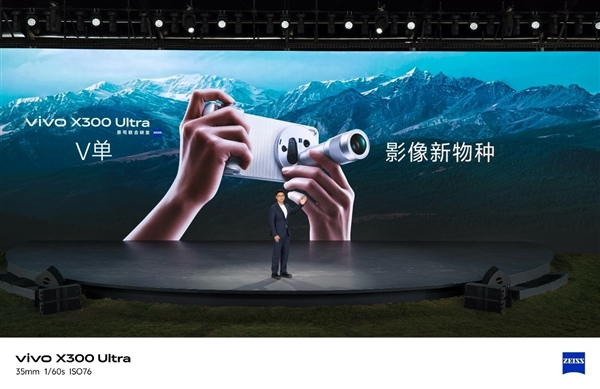
“We had some vague ideas starting with the X100 Ultra. With the development of technology and the change of social media from text to video, there will definitely be new demands,” Huang Tao explained. “vivo’s definition of V-Single is a completely new category of product, which is different from the thinking behind mobile phones. We believe that users will have new demands, which are extremely portable and highly intelligent (devices), and very convenient for direct output and sharing.”
In terms of product line layout, vivo has already clearly defined the X series.
X Ultra (X300 Ultra) : A new species designed entirely with a camera mindset, combining the advantages of smartphone intelligence, AI, and portability. Its future appearance may be significantly different from existing mobile phones.
X Pro : Positioned as a phone with excellent imaging capabilities, it still belongs to the mobile phone category, balancing portability and feel.
X Super (X300s) : A product with an excellent overall experience, balancing performance in imaging, gaming, large screen, and large battery.
In other words, the X300 Ultra is not in the same category as other brands’ Ultra models, so vivo’s X300 Ultra will have more aggressive configurations and upgrades in imaging.
The dual 200-megapixel cameras aren’t just for marketing; they address real user pain points.
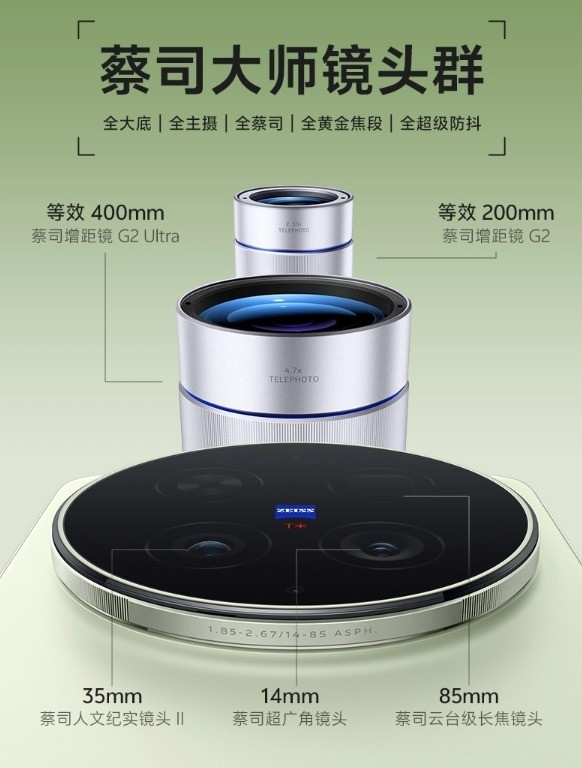
The X300 Ultra boasts impressive imaging hardware, with both the main camera and telephoto lens using 200-megapixel sensors, but the ultra-wide-angle lens doesn’t follow the high-pixel approach. Han Boxiao revealed the considerations behind this decision.
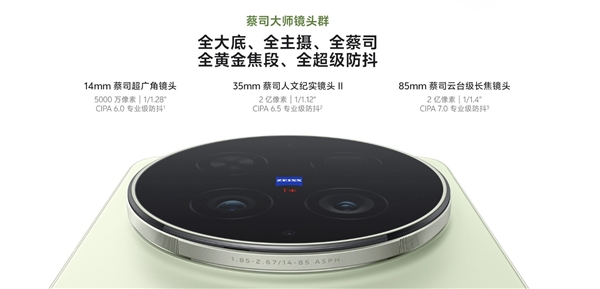
“Most of the short video cameras on the market use ultra-wide-angle lenses as their main focal length, and most of the current sensors do not yet meet our requirements for video performance,” said Han Boxiao. He added that vivo’s current selection strategy is no longer simply about comparing parameters, but rather about solving user problems and prioritizing solutions with better contrast, dynamic range, and low-light performance.
Interestingly, the dual 200MP camera solution on the vivo X300 Ultra is also at the forefront of the industry, but vivo did not mention this at the launch event. Huang Tao explained, “This is not important to us now. We chose this solution for the sake of the user experience, not for the sake of 200MP.”
Huang Tao stated that vivo’s approach has undergone a significant shift in recent years, moving away from simply pursuing marketing successes and focusing instead on real-world user scenarios. For example, vivo remains committed to investing heavily in technologies like image stabilization and autofocus, where the impact of investment may be subtle, solely to solve practical user problems.
Vivo responded positively to all user pain points addressed. Regarding the complex UI of the professional video mode, vivo promised to optimize it in a future OTA update. Regarding the media’s suggestion for personalized teleconverter stickers, Huang Tao immediately stated, “Excellent suggestion, we’ll implement it right away.”
The mobile phone photography accessory ecosystem is abundant, and the learning curve is not steep for ordinary users.
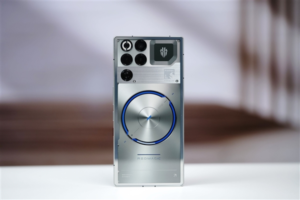
Regarding accessories, the X300 Ultra offers 200mm and 400mm teleconverters, a camera cage, and other accessories. Han Boxiao revealed that the external lens mount solution will maintain universality; it is currently compatible with the X300 series and X300s, and older models can also use it through software adaptation. In the future, this mount is expected to be extended to the S series, with plans to release more lenses such as fisheye and macro lenses, enriching creative possibilities.
Regarding concert scenes, Han Boxiao confidently stated that with a teleconverter, the X300 Ultra remains usable at 70x zoom, solving the problem of insufficient clarity for ordinary users shooting from the back of the stands. “Both professional and ordinary users can benefit from this.”
Regarding the “learning curve” that ordinary users are concerned about, both Huang Tao and Han Boxiao believe that professional users and ordinary users are not mutually exclusive. Huang Tao especially recommends using teleconverters with portrait videos: “The effect of shooting portrait videos with a teleconverter is extremely stunning. The optics and sense of cutting through the air brought by the telephoto lens make every shot look great, and you don’t even need to worry about composition.”
Furthermore, vivo has recognized the shortcomings in color schemes and design of its past products, particularly targeting female and younger users. Huang Tao stated that the design of the X300s and X300 Ultra photography kit has been adjusted towards a more youthful and unisex direction, and the company will continue to enhance accessories and service experiences for female users in the future.
It’s worth mentioning that vivo is preparing product solutions for selfie and personal travel photography scenarios, which seems to confirm previous rumors that vivo would launch a Pocket-like camera product. Huang Tao revealed: “The user scenarios are real and the pain points are strong. Everyone can look forward to a series of new solutions when the next generation of X series products is launched in Q3 this year.”
Blueprint’s native colors bid farewell to the “AI flavor,” while its functions actively embrace AI.
Vivo’s newly launched color science is also a major highlight, achieving a full-chain color science from accuracy to beauty to personalization, giving users true creative freedom. The Blueprint Native Color is a concrete manifestation of vivo’s years of accumulated expertise in imaging aesthetics. Han Boxiao explained that the new color style features softer color and light transitions, leaning towards a film style, aiming to move away from the digital feel and excessive “AI flavor” of traditional mobile phone photography.
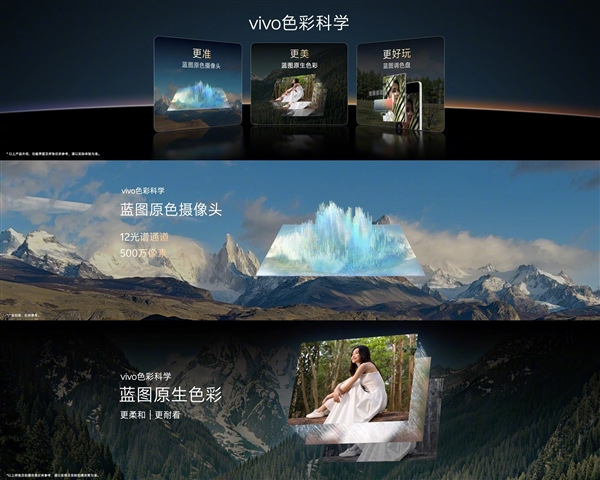
Saying goodbye to the “AI flavor” in imaging doesn’t mean rejecting AI in terms of functionality and exploration. For example, vivo took the lead in launching AI functions related to imaging. Han Boxiao explained: “(The launch of this function) was done with a mindset of breakthrough and innovation. Maybe a year or six months later, when people look back, they will feel that this product seems nothing special, but at this stage it is still very innovative.”
Of course, innovation isn’t just about innovation for the sake of innovation. Vivo has a clear understanding of the overall development of AI: “On the one hand, we will follow the industry, that is, follow consumer demand. We will not lag behind in what consumers need and what truly creates value for them. At the same time, we welcome the integration of various ecosystems and will not deliberately build barriers in any ecosystem. On the other hand, we want to differentiate ourselves and leverage Vivo’s advantages as a mobile phone manufacturer, such as our strengths in phone settings, files, and information security.”
Regarding the issue of limitations on the number of times AI-generated video can be created, Huang Tao frankly stated that the cost of using cloud-based AI is extremely high. “If it were completely open, it could be a bottomless pit. We are also considering opening it up to those who genuinely have a strong need for paid use.”
Han Boxiao added that in the past, image AI relying on local computing power on mobile phones was not effective, and now cloud-based inference is extremely expensive. “The creation of every AI (image) involves purchasing computing power. In the long run, AI applications will eventually all be paid models; it’s just that the Chinese market needs time to adapt.”
Returning to the real needs of users, the X300 Ultra quickly sold out and new orders have been placed.
Following the launch event, the X300 Ultra and its accessories quickly sold out. Huang Tao stated that the vivo team is generally quite conservative, even cautious, and the strong sales exceeded expectations; additional orders are currently being placed.
When discussing vivo’s shift in thinking over the past five years, Huang Tao said, “In the past, when marketing needs and users’ real needs conflicted, they might have each taken a 50/50 chance. But now, vivo is absolutely committed to standing on the side of users’ real needs, solving real problems for users in real scenarios, and making this the first principle of all our product decisions.”

Kazam is Focused on creating and reporting timely content in technology with a special focus on mobile phone technology. Kazam reports, analyzes, and reviews recent trends, news and rumors in mobile phone technology and provides the best possible insights to enhance your experience and knowledge.