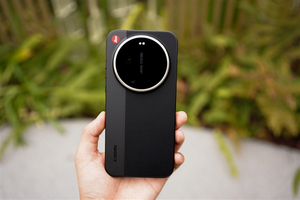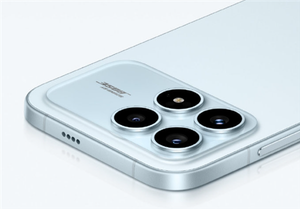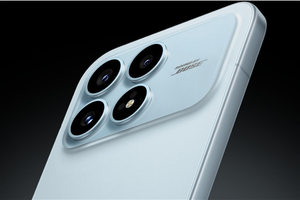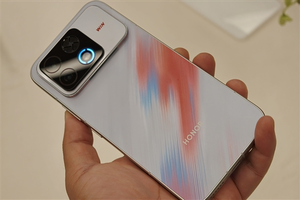
Hu Xinxin’s hands-on experience with the Xiaomi 18 Fold Ceramic Special Edition:
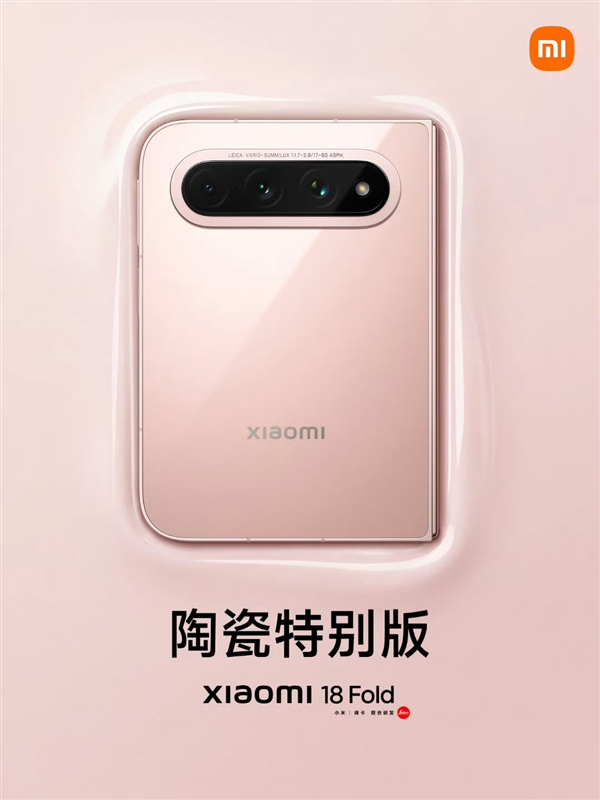
Fast Technology reported that Xiaomi officially announced the release of the Xiaomi 18 Fold Ceramic Special Edition tonight. REDMI Product Manager Hu Xinxin stated that the ceramic special edition features a subtle, understated color, and even her male colleagues are drawn to it, finding its overall appearance warm and jade-like.
It is understood that the core advantages of ceramics lie in their extremely high hardness and smooth texture. Their Mohs hardness reaches 8.5, second only to sapphire and diamond. They also possess a smooth, skin-friendly feel similar to jade. Furthermore, ceramics are insulating materials, will not block signals, will not affect antenna layout, and have excellent heat dissipation properties approaching those of metals.

Xiaomi is one of the earliest mobile phone manufacturers in China to explore ceramic bodies. As early as 2016, the Xiaomi Mi 5 Pro was the first to introduce a 3D ceramic back cover to mobile phones; the Xiaomi MIX, released in the same year, became the world’s first mobile phone with an all-ceramic body.
Subsequently, Xiaomi launched various other technologies, including four-curved ceramic, unibody all-ceramic, and lightweight ceramic, gradually making ceramic a signature feature of the MIX series. Ceramic technology is extremely difficult and costly, making it arguably the most expensive material for phone back covers currently available.
In addition, the Xiaomi 18 Fold is the first to be equipped with the Xuanjie O3 chip. This is Xiaomi’s second high-end flagship SoC designed and developed in-house. It continues the 3nm process technology, and the number of transistors has increased from 19 billion in the previous generation to 24 billion, giving the chip a more powerful performance foundation.
According to data from Xiaomi Labs, the Xuanjie O3 achieved an AnTuTu benchmark score of 5,228,014, making it the first mobile flagship platform in the industry to break the 5 million mark.
The graphics capabilities of the O3 chip have also received a significant upgrade. This chip debuts the new generation G2-Ultra NX graphics processor and continues to use a 16-core ultra-large-scale configuration, with traditional graphics performance improved by a staggering 85% compared to the O1, and ray tracing performance improved by an even more impressive 182%.
In addition, the Xuanjie O3 also focuses on optimizing GPU energy efficiency, achieving a leap in energy efficiency across all scenarios, reducing power consumption by up to 64% compared to the previous generation while maintaining the same performance.

Kazam is Focused on creating and reporting timely content in technology with a special focus on mobile phone technology. Kazam reports, analyzes, and reviews recent trends, news and rumors in mobile phone technology and provides the best possible insights to enhance your experience and knowledge.