Huawei’s new flagship will have a built-in cooling fan

Recently, the well-known digital blogger Digital Chat Station released a piece of news. What is unexpected is that not only iQOO and OnePlus, which pursue extreme performance, but also Huawei’s flagship phones (the next flagship Mate 80?) will use built-in fans.
Will adding an active cooling fan to a mobile phone really become the mainstream configuration for high-performance phones?

Active cooling – Red Magic
Perhaps Red Magic, which focuses on gaming, did not expect that its fan design would be several years ahead of the industry.

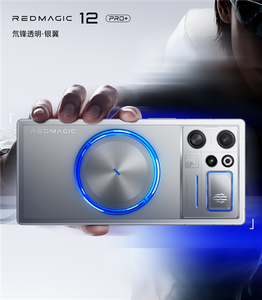
The cooling fan currently used in the Red Magic 10 series is very mature in design. In the mobile phone, the fan and the air duct are an independent structure. Although holes are required on the side of the body for ventilation, the wind only passes through the independent air duct and will not bring dust into the body. The air duct is a metal structure, close to the core heating position, which can directly conduct heat out.


Although the fan of the Red Magic is not large, it can be regarded as a dimensionality reduction attack compared to models with passive cooling. It not only allows the chip to last without frequency reduction, but also allows the mobile phone to appropriately relax the power consumption limit of the chip.
So, if the cooling fan is so effective, why is it only Red Magic that is using it?
In fact, the cooling fan will also bring some problems –
1. Dust and water resistance performance is reduced. Because of active heat dissipation, the body needs to have holes, and dust and water ingress become a problem that is difficult to avoid.
2. Increased thickness and weight, as well as power consumption caused by fan operation.

These problems will not be obvious defects for a mobile phone for gaming, because the pursuit of the ultimate gaming experience must be a bit “geeky”, and there will be no power consumption anxiety if the battery capacity is large enough. But for a mobile phone that pursues a comprehensive experience, it may seem that the gains do not outweigh the losses.
Why have cooling fans entered the mainstream vision?
This question should probably be answered from two aspects: demand and technological development. From the demand perspective, although the current flagship chips can already meet the high-frame operation of large-scale games, consumer demand is also rising.
First of all, for large-scale games, users not only need their phones to run at high frame rates, but also need the high frame rates to be maintained for longer periods of time. With the arrival of summer, playing games on mobile phones that only have passive heat dissipation for a long time will inevitably become “iron plate burner”.
Secondly, the performance of mobile phones is constantly improving, and the current flagship chips can already reach the threshold of mainstream PC games. Installing the Win emulator on an Android phone can already run some mainstream games smoothly. But it is obvious that the mobile phone needs to have stronger and more lasting performance release to make these PC games better.

From a technical perspective, some current application technologies have reached a bottleneck, which requires mobile phone manufacturers to use additional methods to improve product experience; mobile phone battery capacity is already large enough, and fan power consumption will not cause anxiety.
Apart from Huawei’s special situation, iQOO and OnePlus can be regarded as the performance tuning ceiling among models with passive cooling. If you want to further improve the performance experience, active cooling is obviously a low-investment and quick-acting option.
Is there much room for imagination in active heat dissipation?
It was also revealed that some manufacturers have already achieved IPX8/IPX9 full-level waterproofing, but dustproofing has not yet been resolved.

In fact, the fan and air duct of the Red Magic have been modularized. Water and dust entering the module will basically affect the operation of the fan, but will have little impact on the internal parts of the phone. How to easily clean the fan or replace the fan more easily will probably become the core issue of the design.

However, isn’t the replaceable fan the current heat dissipation back clip? The biggest problem with the current mainstream heat dissipation back clip is that it is not portable, because the semiconductor cooling chip it uses requires higher power to operate (the current mainstream semiconductor heat dissipation back clip power has reached 20W-50W), which means it needs to be plugged in separately.

If you want a more flexible cooling method, the ROG 9 with Cool Fan X Pro is a good example. Cool Fan X Pro can not only be powered by a plug (high power operation), but also powered by a mobile phone (low power operation). The fan speed can also be linked to the mobile phone for autonomous AI adjustment to reduce noise and power consumption.

Moreover, since the ROG 9 series is also a gaming phone, the chip is designed to be placed in the middle, so the Cool Fan X Pro can be pressed above the chip to improve the heat dissipation efficiency.

Final Thoughts
As mainstream mobile phone manufacturers focus on active cooling, it is not difficult to find that the boundaries between portable mobile devices and high-performance devices are gradually approaching. For example, in notebooks, Apple’s recently popular M4 Macbook Air removes the fan to make the device more portable.

This seems to indicate that lower power ARM architecture chips will become a major trend in the future, and the X86 architecture will be more limited to fixed scenarios with extremely high performance.
What do you think about the design of the built-in fan in the mobile phone? Are there any good design ideas? Welcome to discuss in the comment area.

Kazam is Focused on creating and reporting timely content in technology with a special focus on mobile phone technology. Kazam reports, analyzes, and reviews recent trends, news and rumors in mobile phone technology and provides the best possible insights to enhance your experience and knowledge.