Xiaomi MIX Fold 5 Major Unveiling: Xuanjie O3+ New OS Fully Upgraded
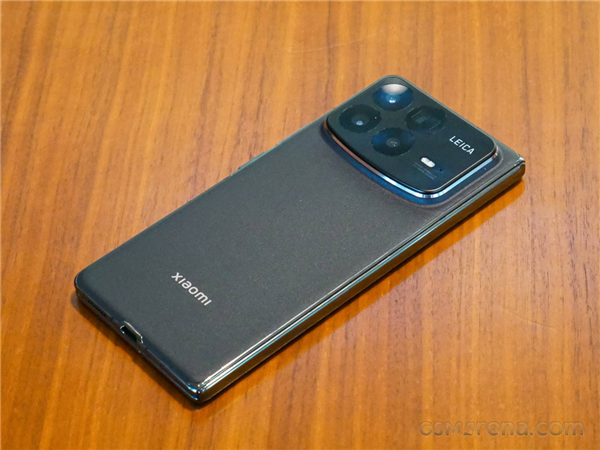
There’s finally new information about Xiaomi’s foldable phone. XimiTime previously leaked a set of photos that appear to be of the Xiaomi MIX Fold 5. The device codename “lhasa” appears on the system information page, the system version starts with 4.0, and it shows Android 17.
Based on previous leaks surrounding this new phone, the MIX Fold 5 is likely to serve two purposes: to relaunch Xiaomi’s foldable phone product line and to become an important showcase for the new generation flagship chip and HyperOS 4.
The MIX Fold 4 was released in July 2024, and since then, Xiaomi has not released a new large foldable product at the usual pace of one update per year. Returning to this market two years later, the MIX Fold 5 clearly needs to offer more significant changes than a regular generational upgrade.
HyperOS 4 and Android 17 side-by-side
The most valuable information revealed this time is not in the appearance, but in the system page.
The system version in the photo starts with “4.0”, while the Android version is directly displayed as 17. If the image and device information are accurate, this indicates that the MIX Fold 5 has entered a relatively advanced software integration phase.
Large folding phones have higher requirements for system adaptation than ordinary candybar phones. Switching between internal and external screens, application continuity, split screen, multi-window, landscape layout, and background resource scheduling all require the system to be optimized separately for the large screen form.
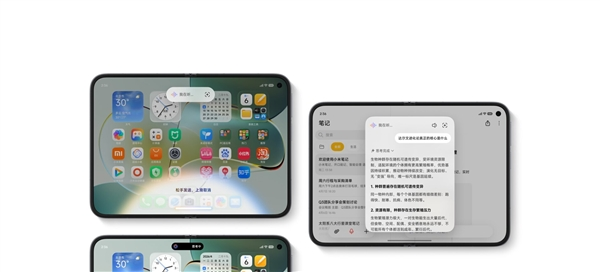
Debuting HyperOS 4 on the MIX Fold 5 also has practical significance. Foldable screens best showcase system-level changes directly: the same application will have different layouts on the outer screen, the unfolded large screen, and in multitasking mode. Features like AI notes, cross-application calls, file processing, and cross-device collaboration are also better suited for display on a large screen. These real-device images at least prove that Xiaomi is already testing a new system version based on Android 17 on foldable devices.
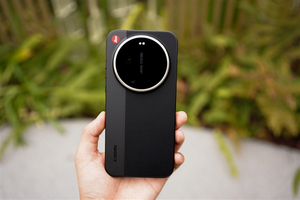
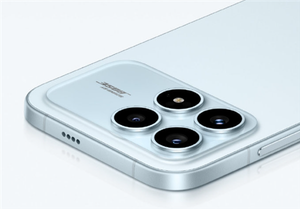
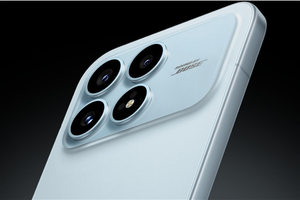
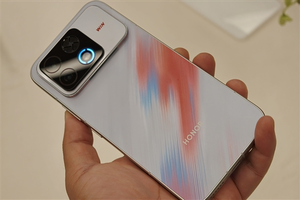
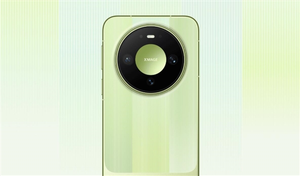
Regarding the appearance, the information leaked so far is incomplete. Some reports suggest a more horizontally oriented screen ratio, and the rear camera module may also be redesigned with a horizontal layout. For a large foldable phone that has already been discontinued, readjusting the body proportions and internal stacking is more in line with this generational change than simply using the structure of the MIX Fold 4.
The key to this foldable screen is the Xuanjie O3.
The most anticipated hardware component of the MIX Fold 5 is the O3 ring.
Previous leaks listed the O3 chip as a core component of the MIX Fold 5, claiming it would continue to use a 3nm process. Xiaomi has not yet released the official specifications of this chip, so information including CPU frequency, GPU specifications, and final performance needs to be confirmed at the launch event.
However, the Xuanjie O1 has completed the first step from R&D to mass production of Xiaomi’s self-developed flagship SoC: this chip uses a 3nm process, integrates 19 billion transistors, uses a 10-core CPU and a 16-core GPU, and has already been applied to mobile phones and tablets.

If O3 continues to use 3nm, the process node itself will not be the biggest change. The CPU architecture, GPU efficiency, ISP image processing, NPU, memory and caching system, as well as the scheduling optimization between the chip and HyperOS, will determine whether the second-generation product can significantly create a difference in user experience.
Putting a new generation of self-developed chips into a foldable screen is a greater test of system engineering capabilities than putting them into a regular candybar phone. The internal space of a foldable screen is further compressed by the hinge, dual screens, and multiple cameras, making the heat dissipation path more complex, and the power consumption strategies in the unfolded and folded states are not exactly the same. If the MIX Fold 5 is the first to launch with the Xuanjie O3, it will become an important product for observing the synergistic capabilities of Xiaomi’s chips in the whole device.
The camera, battery, and hinge were all replaced.
Other leaks surrounding the MIX Fold 5 have also been quite numerous, including a 200-megapixel camera, a 6000mAh battery, wireless charging, UWB, an independent N79 band, a new generation of self-developed hinge, a side fingerprint sensor, and a higher level of water resistance.
The most direct upgrade is the battery. The MIX Fold 4 has a 5100mAh battery; if the new phone ultimately reaches the 6000mAh level, the increase will be close to 18%. For a large foldable phone, the larger inner screen and longer multitasking time mean that a larger battery capacity can directly alleviate the battery life pressure under frequent large-screen use. If wireless charging is retained, it will also maintain the integrity expected of a flagship product.
The 200MP main camera is also worth noting. Foldable screens have often compromised image specifications to save space and thickness. If Xiaomi is willing to include a higher-spec sensor in the MIX Fold 5, it indicates that this generation of products will continue to position itself as an all-around flagship. The hinge and waterproofing determine the overall thickness, reliability, and long-term user experience; these factors often have a greater impact on foldable screen users’ purchasing decisions than benchmark scores alone.
Regarding pricing, current market rumors suggest it will be above 10,000 yuan. The MIX Fold 4 started at 8,999 yuan, so if the MIX Fold 5 includes features like the O3 microcontroller, a 6000mAh battery, a 200-megapixel camera, and HyperOS 4, a price increase wouldn’t be surprising. The real challenge Xiaomi needs to address is providing a sufficiently significant product differentiation at a higher price point.
The MIX Fold 5 has been discontinued for two years, making its return even more anticipated than typical annual flagship phones. With the Mi 3 folding mechanism, HyperOS 4, Android 17, a large-capacity battery, and a new folding structure all integrated into a single device, Xiaomi aims to showcase not only the next generation of foldable screens but also the complete form resulting from the synergy of its self-developed chip, system, and hardware.
The new phone’s name, release date, MIX O3 specifications, and final configuration have not yet been confirmed by Xiaomi. Based on the current leak schedule, the development of the MIX Fold 5 is clearly progressing. The most anticipated aspect is the official specifications of the MIX O3, and what level of performance this chip can deliver within a large folding device.

Kazam is Focused on creating and reporting timely content in technology with a special focus on mobile phone technology. Kazam reports, analyzes, and reviews recent trends, news and rumors in mobile phone technology and provides the best possible insights to enhance your experience and knowledge.