Xiaomi’s self-developed Xuanjie chip is about to be released: putting some pressure on Apple.

Lu Weibing, partner and president of Xiaomi Group, revealed in the Q2 2026 earnings call that the cumulative shipments of the Xiaomi Xuanjie O1 have exceeded one million units. Even more noteworthy is the upcoming release of the next-generation Xiaomi Xuanjie chip.
This once again proves that Xiaomi is gradually transforming its self-developed chips from a technological breakthrough into a product roadmap that can be continuously iterated.
Xuanjie O1: Xiaomi’s First Answer Sheet
In May 2025, Xiaomi officially released the Xuanjie O1. This is Xiaomi’s first flagship-level 3nm mobile SoC, using TSMC’s second-generation 3nm process, integrating approximately 19 billion transistors in a chip area of approximately 109 square millimeters. With this chip, Xiaomi became the fourth company in the world, after Apple, Qualcomm, and MediaTek, to release a self-developed 3nm mobile processor.
More importantly, the Xuanjie O1 did not just remain a “parameter display” at the launch event, but actually entered mass production devices and was used in products such as the Xiaomi 15S Pro, Xiaomi Mi Pad 7 Ultra, and Xiaomi Mi Pad 7S Pro, allowing the self-developed chip to be tested by the real consumer market.
The results demonstrate that Xiaomi possesses a complete set of capabilities, from chip architecture and system design to mass production terminal adaptation. The Xuanjie O1 has now achieved cumulative shipments exceeding one million units. Lu Weibing’s public disclosure of this figure signifies that Xiaomi has a certain product and supply chain foundation for the next stage of development of the Xuanjie chip.
The real difficulty in developing a self-developed SoC is never just designing the chip, but ensuring its stable mass production while solving a series of problems such as power consumption, heat dissipation, communication, imaging, AI, system scheduling, and software and hardware ecosystem. The fact that the Xuanjie O1 has completed verification with millions of terminals is itself an important demonstration of its capabilities.
What will the next generation of Xuan Rings bring?
Currently, Xiaomi has only officially confirmed that “the next-generation Xuanjie chip is about to be released,” without revealing its full specifications. However, recent leaks suggest that the next-generation Xuanjie may be named Xuanjie O3 and is expected to use TSMC’s 3nm process.
The engineering prototype has been revealed to adopt a design of “super core + high-performance core + small core”. The super core frequency may reach 4.05GHz, the high-performance core is about 3.42GHz, the small core is about 3.02GHz, and the GPU frequency may reach 1.49GHz.
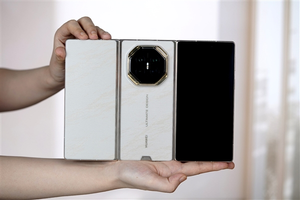
If these parameter information is reliable, then the Xuanjie O3 has already approached the core competitive range of top mobile SoCs such as Apple and Qualcomm. There are also reports that the new generation chip is expected to appear first in Xiaomi’s new generation of foldable flagship, which also means that the Xuanjie chip has the strength to undertake the core experience of high-end flagship.
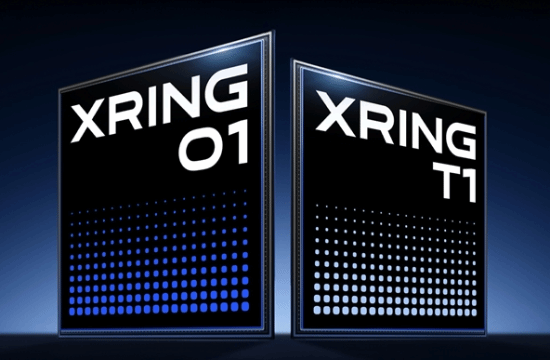
It’s worth mentioning that the Xuanjie series chips are not only for mobile phones and tablets. The Xuanjie T1, which was unveiled at Xiaomi’s 15th Anniversary Strategic New Product Launch on May 22, 2025, is a product for smart wearable devices. It integrates a self-developed 4G baseband and supports 4G eSIM independent communication.
This means that “Xuanjie” is not just the name of Xiaomi’s mobile phone chip, but is gradually becoming the underlying technology platform in Xiaomi’s smart hardware ecosystem.
As AI smartphones, AI tablets, smart cars, and various smart terminals continue to develop, the importance of self-developed SoCs will only increase.
If Xiaomi can further integrate the Xuanjie chip with HyperOS, AI big data models, image algorithms, and self-developed hardware in the future, then the value brought by the chip will not only be the improvement of benchmark scores, but will be able to directly participate in the definition of the entire product experience, and build a more complete technological moat.
The completion of the million-unit shipment milestone for the Xuanjie O1 is the first phase of the company’s success; the next-generation Xuanjie chip will determine whether Xiaomi can truly grow into a long-term flagship SoC competitor. September will see a flurry of new product launches from Xiaomi. Lu Weibing has confirmed that the next-generation Xuanjie chip is about to be unveiled.
In the context of increasingly fierce global technological competition, mastering core chip technology means having independent control over a company’s key technological paths. Xiaomi’s continued advancement of its self-developed chip strategy has not only strengthened the resilience of its supply chain but also provided solid technological support for long-term sustainable development.

Kazam is Focused on creating and reporting timely content in technology with a special focus on mobile phone technology. Kazam reports, analyzes, and reviews recent trends, news and rumors in mobile phone technology and provides the best possible insights to enhance your experience and knowledge.